
Interview with Jackie Gorman
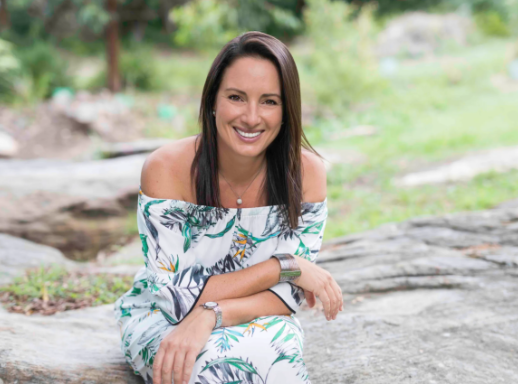
I chat with Jackie Gorman from Nurture by Touch. We discuss the tradition of Jamu postpartum belly binding and Jackie’s journey from receiving this care in Singapore to developing practitioner training in Australia. We explore preserving culturally rooted care while helping mothers feel held, supported and reconnected with their bodies after birth.
Listen Now
About Jackie
Jackie Gorman is the Founder of Nurture by Touch and The Nurture by Touch Method. Her journey began 15+ years ago after a difficult labour in Singapore left her depleted and overwhelmed, with no family nearby. A Jamu postpartum practitioner, Hana, cared for her daily for a month through massage, jamu abdominal herbal treatments, belly binding and for the first time since birth, Jackie felt truly held. That seed became her life's work; she never returned to corporate. For 9 years she's honoured this bodywork tradition in mothers' homes. She's a certified Jamu Innate Postpartum Care Practitioner and VETAB Accredited Cert IV Trainer, with an IICT-accredited Method.
Reach out to Jackie here: www.nurturebytouch.com.au
We explore the following questions:
How did Jackie’s own postpartum experience in Singapore lead her to create Nurture by Touch?
What did Jackie learn from the traditional Jamu postpartum care she received after becoming a mother?
Why did Jackie choose belly binding and wrapping as the focus of her postpartum work?
How does Jackie adapt belly binding and wrapping to suit each mother’s individual needs and comfort?
How can postpartum bodywork help mothers feel more connected to their bodies after birth?
What are Jackie’s plans for training more Jamu postpartum practitioners and making this form of care more accessible across Australia?
If you love this podcast please subscribe leave a 5-star rating and review wherever you listen!
Transcript
Julia Jones:
Hello and welcome to the Newborn Mothers Podcast. Today we have a special guest, Jackie Gorman, whose business, Nurture by Touch, provides belly binding to people in the Sydney area. And Jackie, I'd love to hear a little bit about your own experience and how you came to be involved in postpartum care and specifically belly binding.
Jackie Gorman:
Hi, Julia. Thanks so much for having me today. Yeah, it's a real lived experience as a mother for me. I gave birth in Singapore, and in that time, living there for about five to six years, in my antenatal classes, I met this beautiful Malay Singaporean auntie. And she's probably very much similar to what we have here in Australia, which is our beautiful doulas. Many of them are trained and certified by you.
They are called confinement aunties in Asia. So they sort of represent many facets of doulas here in Australia. But we just started chatting one Saturday after the antenatal class and over a cup of tea. She was a close friend of the director of the particular American company that I went to in Singapore for my antenatal classes. And we got chatting, and she said, "Oh, do you want me to come over and just give you a couple of pregnancy massages?"
And I said, "Hana, that sounds great." And during that last trimester of pregnancy, she started talking a bit more deeply about her work.
And she spoke about this innate tradition that she honours called Jamu, J-A-M-U. And she travels all over Singapore to do this particular body work of care, where she's with mothers for about a month. She spoke about food. She spoke about what the Malays, Singaporean, and Indonesian cultures had been doing for centuries. And she also recognised with the modern world that this innate tradition was very hard to try and keep alive within the newer generations of mothers, sort of leaving countries and living abroad, and not really applying this part of the care from their cultural lineage.
So she said to me, "After your son's born, do you want me to pop over and do this work for you and see what you think?" And I said, "Yeah, no, that sounds fantastic." So after Lachie was born, I think she got to the house on about day five or day six postpartum.
And she literally was there with me every day for a month doing this work. And with my background from an anatomy and physiology point of view, I knew what to expect. Plus, we had had all those lovely chats during the antenatal classes, but nothing could have prepared me for what actually happened to me, which — I didn't have my South African family with me, I didn't have my Australian family with me. Things were super, super, super lonely and isolated.
My husband at the time started travelling, I think, about four weeks postpartum. I think Lachie was only four weeks old. And I went downhill pretty fast. And Hana had such an impact on me emotionally and mentally and sort of spoke to me about what it meant to have community and tribe around you. So all of these concepts didn't mean much to me at the time.
So she already started chatting about all these cross-cultural foundations to postpartum care, which you teach as well. So she started talking to me about rest and warmth, body work, community. She also realised that I was quite fascinated by the food that I was getting. I gave birth to Lachie in a hospital called Thompson Medical. And in my ignorance, I was expecting Milo, cold jelly, a couple of slices of toast, and who knows what I was going to get for food. But the food that came out—and I was there for six days, I didn't rush home—the food that came out had such an impact on me. It was soups and broths and traditional Chinese medicine mixed into the teas. You had a lactation consultant come to you every day. You had this unbelievable warming food that I remember.
When I was discharged, Dr. Paul Singh, my OB, came in and said, "Jackie, I hear you love the food."
And I said, "Yeah, it's been so good."
He said, "Would you like to meet the team?"
I said, "I'd love that." So as I was walking out of the hospital, I popped into the kitchen, and was introduced to the kitchen that was run by two TCM doctors, a lactation nurse, and then, obviously, your nutritionist/chef.
I walked around that kitchen looking at this food that they were preparing for the maternity ward, but at the same time, they were telling me that on the other side of the hospital, which is postoperative, a variety of operations or even post-cancer treatment, there was a similar kitchen, but they would focus on postoperative and people going through chemo.
So I was just astounded. And so Hana started talking to me about that. And it was still about a month later; we walked around a couple of food courts and went to pick up very specific ingredients, and she taught me how to cook all this food and sort of made it part of my life. Every now and then when winter comes, there are a few recipes that I still love cooking for Lachie and me.
But that's how the journey started, was having her with me. And the seed was planted pretty heavily, but I didn't know what it meant at that stage.
And it was only after I got back to Australia. I woke up one morning, got Lachie to school, and it was a very, very clear, very calm, very focused feeling in my heart and mind, and I knew I'd never go back to corporate.
And about nine years ago, I started building Nurture by Touch, and I went back to Singapore. I got certified and trained there, and then a year later flew across to Indonesia to the Jama College. And I took a deeper dive into the Indonesian concept of Jamu, which comes from East and West Java.
So there was this cross-cultural aspect that Hana opened the door to me with the Malay Singaporean Foundation. And then going to Indonesia gave me an insight into that as well. So I certified in those two countries and then came back and slowly started to build the business.
Julia Jones:
Jackie, out of all of those things, it sounds like you actually got to experience very comprehensive postpartum care. And why did you pick belly binding as the thing that you would primarily offer?
Jackie Gorman:
Because of physically what it did for me. So labour was probably about—well, the whole journey was probably about 38 hours. It was the closest to what I was going to get for natural. There was no home birthing in Singapore. The rates of caesarean births are very high, and I was super lucky to get Dr. Paul Sing. So he is one of the only OBs in Singapore who respects your birth journey, and he gave me the suite with the pool. So he was even pretty chilled when my waters broke after yoga, and he said, "Oh, just go home. Take your time. Don't worry about it. Just keep labouring at home. I'll see you when I see you." And it was probably about, I don't know, 18 hours later when Julian and I entered the hospital. And I think the extent of that was 38 hours, and then eventually, after 24 hours, succumbing to an epidural and then falling asleep and resting.
But in that time period, Lachie turned on me, so we were back-to-back. And then when Paul tapped down the epidural, long story short, Lachie had to be helped out with a vacuum. And the impact on me physiologically, and what actually happened afterwards, was the reason I think Hana sort of explained to me what she was going to be able to do. There was a lot of discussion around the symptoms that I was experiencing at that stage, the birth that I'd actually had. And Hana adjusted her technique of belly binding according to Lachie's birth, but also according to what had happened with the epidural and also through the vacuum birthing experience.
I mean, I remember within about 24 to 48 hours— so that means two sessions with her— that unbelievable disconnect that I had with my body, all this space and this air and this emptiness. And I had huge inflammation in the liver, the kidneys, the gallbladder, and spleen.
And she explained to me, "Be prepared that you're going to feel lighter. The first two things that are going to be targeted is your water retention will come down very quickly, and we're going to try and kick in your lymphatic circulation to try and help that liver to detoxify and to bring down the inflammation."
So all of that language made sense to me, but I don't think it really set in until I looked at her two sessions in and I said, "You weren't lying, were you? This is profound. I feel I'm reconnecting with my body. I feel lighter. I've woken up this morning. The hands and feet are settled. I'm having terrific bowel movements after being constipated for the last two weeks, and you're going to be here for a month. What else is going to happen?"
And she explained everything to me. She said, "Well, we're going to now target the rectus abdominus muscle. We are constantly going to focus on the most important system in your body, which is the lymph system."
She spoke to me about the Jamu technique, and the massage is super, super gentle and nurturing, and it's probably about 80 to 90% manual lymphatic drainage. And I remember while she was working, she would be sort of pumping, releasing, pumping and releasing. And I knew that she was working on a considerable amount of lymph nodes.
The gas and the wind expulsion out of the body was huge. There was a push through of extra blood clots and residual bleeding. And she said to me that was very important because if that stays behind, this is going to increase your inflammation markers, which makes your journey in menopause so much more complex.
So another part of the work she explained to me that she's been doing for years is to make sure that a woman gets the removal of all that lochia, that extra blood and blood clots. So that all started to make sense for me. But week by week by week across those four weeks that she was with me, I could see the rectus abdominis muscle above the navel and around the diaphragm reattach. I think Lachie was only about 3.5 kgs. So I had a natural sort of diastasis recti.
There wasn't anything considerable to worry about, any herniation or any immediate pelvic floor health work. But when she was done, she said to me as well, when I walk out this door, you must engage pelvic floor health with a physiotherapist in Singapore. And this was all 16 years ago. I'm a Western mom having grown up with this lineage, and the biggest learning curve I could ever have gone through is having her in my life and showing me these platforms of postpartum care.
And then even realising when she walked out the door, well, this doesn't stop things for the next 12 months now. I need to work on pelvic floor health, make sure the blood is okay, make sure there are no prolapses. Let's go and have a look if there's anything that I need to worry about.
Julia Jones:
And were you in massage or something before this, or was that just what really brought your interest into this physiological healing? Was it just literally your own personal experience?
Jackie Gorman:
No, in my 20s, the trade that I trained at in Stellenbosch, college in Stellenbosch, South Africa, I trained as an esthetician, a health and skincare therapist, and I was a massage therapist, aromatherapist, and reflexologist. So I started with my hands and studied at the college for two years.
But then from that I went into sales training and marketing, and I worked for a variety of skincare companies. And then just before we moved to Singapore, I was wrapping up a job in London and Europe as project director for a spa design and consultancy company. So it was always in that wellness industry or the spa industry or the skincare industry, but I went from hands-on to sales, training, marketing, and then building and helping hotels open up or retreats in Europe and North Africa to open up their spas. And those were projects that used to last up to about 18 months. But in that capacity, I was also training the therapists that came on board to work in those spas. And that was my last job before I thankfully fell pregnant, close to age 40. It took a long time. I think we started trying when I was 34, 35.
Julia Jones:
So it was really a matter of luck as well that you were in that place to meet that person and find out about this.
Jackie Gorman:
Yeah, no, she's a huge part of who I am now and I've got a lot to thank for her, not just personally in my postpartum phase, but what she taught me, and I'll never forget, after I returned to go and get trained and certified by her, and I spent a bit of time on the road with her watching her care for clients, when she said goodbye to me, gosh, I'm trying not to be teary now.
She said to me, "If you ever do something, if you're going to build this business, because there are a lot of Singaporeans and Indonesians and Malaysians in Australia, Jackie, you need to make a promise to me."
And I said, "What's that, Hana?"
And she said, "Please don't let this innate tradition die because it is in our modern world."
And yeah, it stuck with me, and it has stayed with me for years.
Julia Jones:
Amazing. So I know that you are obviously really focused on that real physiological healing aspect of binding. I'm wondering if you can talk a little bit more about some of the different kinds of belly binding and wrapping and maybe some of the different cultures as well.
Jackie Gorman:
I'd love to. I suppose where we can start is another technique that I'm trained in, but I never went ahead and did it because I stayed focused on Jamu. So we've got the rebozo. I've got my rebozo actually sitting on the bed behind me and handed down by my teacher in Mexico. So rebozo is used for a beautiful, nurturing ritual of care, which is called closing of the bones. And a lot of it predominantly originated from Mexico, but there are also parts; if you dive deep into the history of it, there's a huge part of the rebozo’s history sits in Russia as well. And closing of the bones is a one-off ceremony for a mother, and it can happen while she's pregnant to help with aches and pains. There are many doulas that use rebozos during birth as well to nurture the pelvis, to nurture the abdominal area, and to nurture the diaphragm.
And these rebozos get used in a variety of ways of compression around feet and ankles, compression around legs, compression around the pelvis and abdomen, and you can even move up towards the lymph nodes under the arms, and then just beautiful pressure around her head as well. They are also one of the ceremonies that can happen within mother circles. Closing of the bones amongst a group of mothers that are very close to one another is a lovely ritual as well.
At the end of conception, when mothers have decided that they've finished having a family, closing of the bones is another lovely ritual to honour her for birthing children. And closing of the bones can also happen after a mother has very sadly experienced loss. So you can use closing of the bones to deeply nurture her. So that's your rebozo.
From rebozos, we can move to something very similar, which is fajas. Fajas are beautiful cloths and wraps and colours, almost like a rebozo. They come from Colombia. This is holding a mother, and it's also one of the rituals or sessions that can happen during pregnancy. Doulas can use it during birth. And you can also do these one-off holds, holding of specific parts of the body after birth. Fajas aren't really something used in mother's circles, neither at the end of conception nor necessarily, sadly, after loss of life.
It's more of a hold during pregnancy, during birth, and then afterwards. Then also here behind me, I've got this variety of stunning batik cloths. I've sort of collected them over the years from Malaysia, from Indonesia, and from Singapore. And batik cloths are also just for holding a mother. You can wrap her pelvis, and you can wrap her abdominal area during pregnancy and then after birth. And they also just one-off rituals of holds that can happen to a mother. It's not something that they sleep in. It's not something that they stay wearing for a considerable amount of time. Many doulas can use them as part of their service offering, either while she's pregnant or at the end of afterbirth during postpartum, just doing a couple of wraps and holds for her if she's there making a cup of tea or doing laundry or helping with the baby.
So we've got the rebozo from Mexico, closing of the bones. We've got fires, and that's also a hold, batik cloths, which is also a hold. Then we've got the stunning, stunning bangkung belly binder, which I'm trained in as well. They come in a variety of sizes and a variety of beautiful colours. It's a complex, time-consuming knotting, plaiting system. I used it for about a year after being trained in Singapore, and Hana actually never uses this anymore. She does the three-phase physiological binding, which I'll get to. But the bangkung, you can only be in it for about four to six hours. Some of them are tremendously big, so they go all the way up, right over the rib cage, right under the breast lining, and some of them cover the pelvis and the pubic area. So going to the toilet is almost impossible.
Julia Jones:
I think that's one of the more common types that people have heard of, but I have heard people say they haven't enjoyed. I mean, there are always people who don't enjoy all kinds of different physical experiences and sensations, but I've heard from some people that, yes, it can be too restrictive and too tight.
Jackie Gorman:
Yes, yes. And I think it took me about eight or nine months. I shifted away from the bengkung. I flew back up to Hana and said to her that this is not resonating with me. As beautifully cultural as it is, my brain is too. I need to take a deeper dive into her body. I need her to keep something on longer, sleep with it, and take things through from a physical point of view that I experienced with you, Hana, but allow her to be comfortable enough that this is going to stay on and I can adjust my technique and knots. And that's when I pivoted.
So I've never used the bangkang again, but it's beautiful. Look, it's highly traditional. It's a lovely hold. Again, it's not physiological binding and wrapping. It's definitely utilised in Australia by a variety of doulas who love it, and they're one-offs. Mom doesn't stay in that.
She can only be in it for about four, five, six hours or to the point that a mother feels like, "Look, I need to get out of this because I need to go to the toilet." And it is intense. It constricts you quite considerably, which can actually aggravate, with some mothers, can aggravate anxiety or the feeling of, "I just cannot breathe."
Julia Jones:
It's so interesting that there are all these different kinds, and I bet every practitioner and every mother has different preferences, and it may even change with each baby what feels good and what works and what doesn't as well.
Jackie Gorman:
Totally. I mean, even now, if I step into explaining what I do over the last nine years, there have been mothers where I've had the privilege of stepping in for the third time, the third baby, and they've turned to me and said to me, "Oh my goodness, Jackie, this is so much more consoling and so much easier than the first time.” There's mothers that have absolutely no problem sleeping with it and then removing it the next day, like I need them to do. Go and have your shower and then let that skin and that area breathe and have oxygen for at least two hours before the care gets repeated. But then there's some mums after session one and session two; I always stay in close contact with them. It takes about two to three sessions to get used to. By session three, I've got a really good understanding of where she's at, how I need to change my technique, what feedback she's given me, and how she's settling.
And then I don't bother a mom too much with these constant texts or phone calls, but that session one and two, that's where I'm going to get an understanding of what she goes through. And then over the last eight or nine years, there's some mums that will text me and say, "Look, Jackie, that's it. I'm done. I can only do six hours."
And I said, "That's fine. Take it off right now," because it's never ever, ever meant to make you feel claustrophobic, anxious, as if you are irritated with everybody around you, the house, the kitchen; you are now frustrated.
Julia Jones:
The opposite, isn't it, of what you want a mum to feel like.
Jackie Gorman:
Totally.
Julia Jones:
It's really powerful in two ways. The two things I'm noticing are that continuity of care is so important during this stage of life, but also the real trust in a woman's body and helping her to really feel into what's right for her and feel kind of empowered to make her own choices is equally just so important. There's no one right way. There's no one right technique. There's nothing that's going to work for everyone.
Jackie Gorman:
No, no, you're completely, completely right, Julia. Yeah, some mums make it till after dinner, and they'll let me know the next day. Like Jackie, when I went to bed, I just felt I needed to remove everything so that I could just have a little bit more movement and a little bit more sort of consoled by breastfeeding and what the night's going to bring me or how many times I've got to get up. And there are some mums that I'll get to the next day, and it's usually the mums that, while I'm binding them and before I get to the third and last stage, while I'm with them, they're already using these words. "Oh wow, Jackie, that feels so consoling. That's like a big warm hug around my body. "Or she'll use the words like," Oh, there I am." And I usually always stop and look in her eyes because it's quite emotional.
And when she says, “Oh, there I am,” it's that space and emptiness that's in that area. And we're so disconnected from our bodies after birth that when you hold that area, there's not just the physiological side, which is tangible for me as a practitioner. It's black and white. I know what's going to happen. It's the other side of the table that's so deeply empowering for a mother is where she can actually look at you and say, “I feel as if I'm reconnecting with my body.”
And that's quite emotional. And when she does that, and then over this continuity of care for three to four weeks, she just gets stronger and stronger and stronger. And it's wonderful when I knock on the door and walk in the next day, you can just see it. The smile's different. The eyes are different. There's something standing in her body, in her house; she's stepping into life, you know she's got this, and it just escalates, escalates from session to session.
And it's such a privilege. It really is. And I never look back, that's it. I'm not going back to corporate.
Julia Jones:
I can really resonate with that feeling as a mother. I was someone who absolutely felt that hollowness, that emptiness, that feeling of, like, Is this even my body? Is this me? And that real disconnection. I know there's a traditional story, and I wish I could remember where from, but of a mother who travels to…I feel like it's probably Native American, but I'm not sure. But it's a story about a mother at birth who travels to the heavens to bring her baby's soul back to Earth, but then they need this journey, this kind of six-week postpartum period to safely bring both of them back to Earth. And that feeling of being bound, it's like being held and brought back into your body, putting the soul back where it should be. And yeah, I know that's kind of a bit woo, and it's also very physiological as well, but there is a real kind of spiritual feeling, I think, to that. And I know that moment that you're talking about.
Jackie Gorman:
Very much so. No, they totally connect to the emotional, the mental, the spiritual, and then the physiological side. They're all intertwined, and you can see each mother shifting through those four platforms individually. It is very individual what she goes through, what she experiences, the feedback she gives you, the mom that wants to get out of it quicker, the mom that maybe removes after dinner, the mom that removes when she goes to bed, the mom that might remove in the middle of the night, because they can text me and talk to me up to a point, and then I've always said to her, "When you know I've gone to bed now, if anything comes up for you in the middle of the night and it just doesn't feel right and you're anxious, because the nights are the most loneliest and isolating times of our lives as a mother, our hubbies are fast asleep, God love them.
They can sleep through anything and everything, and it depends on how that partnership is working at nighttime. Sometimes he is helping; sometimes he is going to be the one who needs to sleep. And when we get up for those feeds or those burping and settling and changing of nappies, you can feel very isolated and lonely. So I've always said to her, if anything comes up for you physiologically or you feel you haven't got control over what your night is bringing, then just tap into what you're feeling and take it off. Tomorrow is another day, and we'll talk about it. There's a reason why she reacts that way. When these things happen for a mum, anger, frustration, irritation, anxiety, I can't breathe, Jackie, get this off me. There's a lot of reasons. It's connected to the pregnancy, and it's connected to the birth. And I only cross that bridge, only cross that bridge when it comes to the table.
And then I slowly work through it with a mother, and we sort of unpack it for the next three to four weeks. And then before I leave, there's just a couple of things that I put in place. If the story's big, there are always practitioners that I reach out to that need to help her further. And then obviously pelvic floor health with physios is another part of her life when I leave her home. So continuity of care, continuity of practitioners that need to help from a trauma-based point of view, all of that is vital to take care of her.
Julia Jones:
You've just explained so beautifully what you do and, well, just how it can change the entire future for a mother, like you were saying, right through to menopause. I'm curious now for my last question: what's next for you? I know you are starting to share this with other people in Australia too. Do you want to tell me a little bit about that and what's next for Nurture by Touch?
Jackie Gorman:
Yeah, I'd love to. Thanks for asking. It's a slow road. It's just me on my own. So I'm on the road and then also trying to do this upscale. Probably I'd say now, about two and a half years ago, it just didn't sit well with me when I had to tell mothers, "I'm sorry, I'm fully booked, or I can't travel that far."
Or, just to clarify what fully booked is for me, I can only take about five, maybe six estimated due dates per calendar month. And it also depends on her location and then me getting back to my own son and doing my own mothering. So five or six births per month means I'm on the road caring for three mothers per day in a cycle of maybe three to four weeks. And what started happening was I was just too far booked out fully ahead.
And a lot of girlfriends would say, "Gosh, Jackie, that's a lovely problem to have,” but it didn't sit well with me. I didn't like saying, "No, I'm sorry I can't help you." There were parts of Sydney that I realised I couldn't get to and get back in time for Lachie, and again, it was almost that same feeling I had, very consoling, very clear.
I said, "Sit down, start writing your manuals. Just start somewhere." I didn't really know what it meant, but it's a hat that I wear quite naturally because I'm a VTAB-accredited trainer, certificate four. I used to be a trainer in three skincare companies here in Australia. So it was a hat that came naturally to me, and I just automatically blocked off one month about two and a half years ago.
And I sat down, and I wrote; this is before I thought about using ChatGPT or before I realised, well, there's something out there that can help me with the structure.
And it took me 18 months, slow and steady, to write the standard operating procedures manual of this work and life of mine. I then wrote the code of ethics, the conduct and the health and safety manual, and then I blocked off a full month, and I pretty much locked myself up, and I wrote the training manual. And the training manual is way beyond I'm going to teach you the Jamu massage. I'm going to teach you the Jamu abdominal herbs and I'm going to teach you the three phase physiological binding and wrapping. The manual ended up being for me, I started to just write about what I saw and what I experienced in the first two years that I had no idea was going to hit me. It was everything and anything that allowed me to collectively understand what birthing a baby was all about and the impact on family.
And I think with time, those were the elements of what we thankfully talk about now, which is matrescence and all those fundamental shifts that happen in us as a woman, but collectively within our family and with our partners. So the manual also prepares the practitioner for all those things that I didn't see coming within the first two years.
There were some big things. There's a lot of transgenerational trauma. There is intergenerational trauma and what this means for motherhood. The manual takes a massive dive into anatomy and physiology. I take you all the way through all the complex hormones that form part of the philharmonic orchestra that dictates what happens to us after we give birth. And I added the knowledge of all those six cross-cultural foundations to postpartum. So rest, warmth, body work of care, nutrition, community, and then matriscence.
And I finished writing it, and then the copywriting got done, and I had to wait a whole year for IP Australia to give me the green light on the logo and trademarks and everything.
I then applied to IICT like yourself, to be a training provider, and I got the green light for that. So I finished up that and then got all the manuals and the three-month training accredited and endorsed by IICT. So whenever I have time, I'm still finishing up the online modules that form part of that three-month process of training. The pilot launch, organic pilot launch, was last year, where I just did a test run, and I settled a beautiful, beautiful mother/practitioner on the Central Coast. So she's been up and running for a year now. And it was the best start I could ever have asked for because she was a mother that I cared for. And she called me up, and she said, "Jackie, I want to leave nursing. I can't do this anymore. And your care had a huge impact on me. We've moved now to the Central Coast. Can I please be your first?"
And I couldn't have asked for a better start in understanding what this was going to mean to upscale, training, and certification. So 2026 has its launch, and then the end of February 2027 is the next intake. So it's a very slow process for me, but it's one foot in front of the other. It's definitely something that I want to step into, plus stay on the road. I'll never get rid of that. I couldn't walk away from the call service. I'll probably feel pretty lost, but I know that training and certifying more practitioners like myself to sit in geographical areas of Sydney that I can't get to, and to be able to help with the phone calls that come from Melbourne and Sydney or the Northern Rivers. Funnily enough, these last two months have had eight, yes, eight phone calls from Perth.
It's either, “Can you please fly over and do the care” or “Can you please tell me if there's anybody certified exactly in this care?" Probably more than 50% of those calls were of Asian lineage. They were Singaporeans and Malaysian.
Julia Jones:
Yeah, I was going to say that it's probably just that newly arrived. I know I don't do anything like what you do, but I know I've had quite a few clients in my past who have specifically wanted massage culturally, and they've said, “Oh, look, I've got my family visiting from India or whatever. They're going to cook, and they know about keeping me warm and all of this, but we don't have anyone to do massage.” And I imagine that's the same thing. There's a lot of newly arrived families, or even people who've been here for a long time but want to stay in touch with that culture, I guess their birthright, but need to find someone here who can actually support them to do that.
Jackie Gorman:
And this is part of the upscale reasoning. It's sort of threefold for me, I think, which is keeping the promises that I've made to Hana and to the teachers in Indonesia. Secondly, honouring this innate tradition that is a vital part of the cross-cultural foundations of care in the postpartum phase. And I think thirdly, it might sound a bit cliché, but I don't know. There's some kind of legacy that I'd love to leave to Lachie of realising that he can step into a deeper understanding one day when relationships enter his life or when a marriage or fatherhood enters his life. And he's going to have the foundations to hopefully understand and to hold some very, very, very, very big emotional spaces and be able to recommend, oh, let's make sure we put some good food in place. Hey, let's make sure we get body work or care done and stay home.
Don't rush out into the world. And all those promises that we are making to women now to slow down and not rush up or bounce back in this culture that we're growing up with. So it's threefold. It's honouring the promises, honouring this innate tradition so that it doesn't die, and getting some more Jamu postpartum practitioners based in parts of Sydney that I can't drive to, but also settling some in Melbourne, Perth, and Brisbane, which are the other areas that I get phone calls from. And this was never going to be about quantity.
I'm not on a mission to roll out quantity, people sitting on one another, on top of one another, on every corner. I want to be able to give them the opportunity that this did for me: this amazing feeling of building your business, holding space, and looking after mothers either pre- or during, or after birth. There are wonderful opportunities for collaboration and relationships for sure. But for me it was going to be about quality. For me, it was going to be about having geographical areas settled with Jamu postpartum practitioners. So yeah, one step in front of the other. Every now and then I do feel terribly overwhelmed with how big the picture is and doing life and mothering and being on the road still doing this care, but I'm not going to walk away from it.
Julia Jones:
No, it's really a calling, isn't it? And I think that moment that you described when you look in a mother's eyes, and you see that she's well changed, but also come home to her herself, it's like you could never walk away from that feeling once you've experienced it. I wonder, my last question for you is how much are you still in touch with Hana, that original practitioner who cared for you?
Jackie Gorman:
Yeah. A lot of mums actually ask me the same question, Julia. We were in contact every single year since, let me just think, when did I go back?
Julia Jones:
15 years ago.
Jackie Gorman:
Lucky was born 16 years ago. I would've been certified and trained nine years ago. And she, by then, was beginning to come off the road. So I would say she would now be in her 70s. It's been about three years now that I haven't been able to make contact. And I fly back every now and then, and I'll reach out. I'll reach out, and I miss her deeply. She's apparently still around, but she is now a quintessential grandmother to about nine grandchildren. And the only reason why I know she's okay is I contacted Di in America. Di was the director of ParentLink in Singapore, where I did my antenatal classes, and Di said to me, "Yeah, yeah. No, she's fine, Jackie. Don't worry. She's just gone underground and pretty much focused on nine grandchildren now."
So I miss her. I miss her a lot.
Julia Jones:
Yeah. But also fair enough. I mean, everyone deserves to retire.
Jackie Gorman:
Yes. I mean, she probably doesn't want…It's like, "Why is Jackie calling me now? I'm not going to do any more training."
Julia Jones:
And she probably knows that you are well on your way now. She feels like we've passed the knowledge along.
Jackie Gorman:
Yeah, no, she followed and watched for a while, and we had some great conversations around that. And yeah, I have her blessing, and she's a blessed grandmother now, so I won't bother her anymore.
Julia Jones:
Beautiful. That's amazing. So Jackie, that's all from me. If people want to find out more about either having you to come and support them in their own postpartum, or maybe learn more about these techniques that you can share, they can visit nurturebytouch.com.au. We'll put those links up on our website under the podcast recording. Do you have anything else you want to finish off with?
Jackie Gorman:
I just want to thank you for the work that you do and have done, and your own mothering and what you've imparted as well to practitioners. I have the privilege of crossing paths with so many doulas that have trained under you, Julia. So thank you so, so much for what you do.
Julia Jones:
My pleasure, Jackie. I always think of us as voices in a choir, so I'm really happy that you are doing your part and I'm doing my part, and it all adds up to just something so much greater, doesn't it?
Jackie Gorman:
Absolutely.
Julia Jones:
Beautiful. Thanks for sharing.
Jackie Gorman:
Take care.
