
How birth mapping helps parents make confident decisions
Interview with Catherine Bell
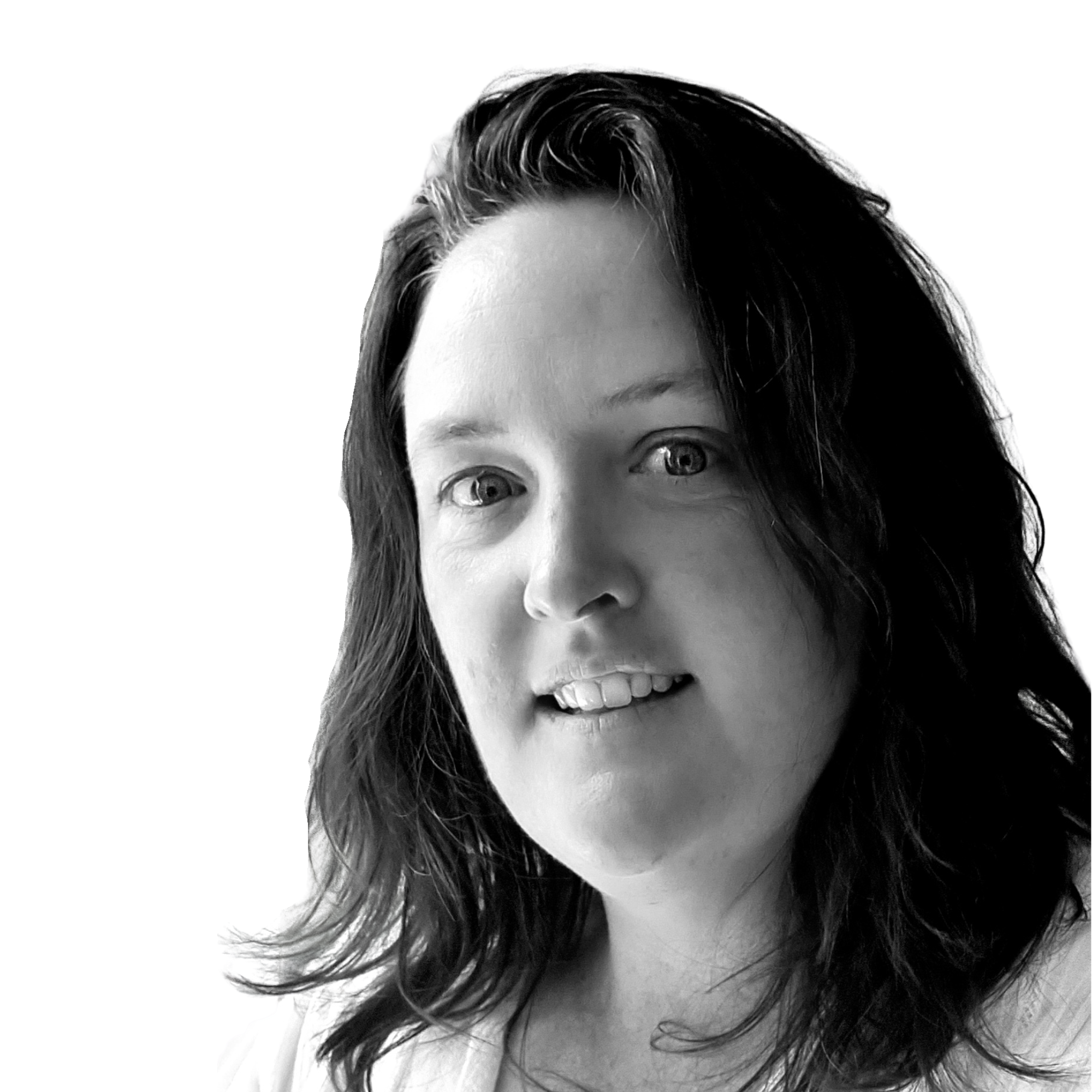
I chat with Catherine Bell from the The Birth Map. Together we discuss Catherine's transition from studying marine biology to motherhood and how she accidentally wrote a transformational book. We explore why we need to support mothers to make confident choices, and how a board game can help partners be more proactive.
Listen Now
About Catherine
Catherine is Managing Director at Maternity Choices Australia. As the creator of The Birth Map and the field of Birth Cartography, she has introduced a new paradigm in maternity care, one that centres on informed decision-making, consent, and autonomy. Her work is evidence-based, community-driven, and infused with storytelling. Her work has transformed how families navigate pregnancy, birth, and early parenting.
Reach out to Catherine here: http://www.birthmap.life/
We explore the following questions:
What is birth mapping, and how did Catherine Bell first become interested in it?
How did Catherine’s background in science communication shape the Birth Map?
Why can traditional birth plan templates sometimes limit women’s decision-making?
Why is balanced, non-judgmental birth information so difficult to find?
What did Catherine’s PhD reveal about how women make confident decisions in birth?
How can sense-making help reduce confusion and trauma after birth?
Why is evidence-based care about more than simply following hospital policy?
How does the Birth Map game help parents understand possible birth pathways?
Why is it important for partners to be involved in birth and postpartum planning?
Why does Catherine now place postpartum planning at the beginning of the Birth Map?
What is matrescence, and how can parents prepare for the transition into family life?
How do women’s life transitions shape their confidence, identity, and leadership?
What is Maternity Choices Australia, and what advocacy work are they doing?
Why should continuity of care and relationship-based support be seen as the minimum standard?
Where can parents and professionals learn more about Catherine’s book, game, and training?
If you love this podcast please subscribe leave a 5-star rating and review wherever you listen!
Transcript
Julia Jones:
Hello and welcome to the Newborn Mothers Podcast. Today we have Catherine Bell, who's a very old friend of mine. I've known you and your work, I should have probably checked before I hit record, but probably for 10 years or more. Catherine is a birth cartographer. She works on a really beautiful and unique birth planning process, which is a birth map. And she's here to share with us a little bit about that and also a bit of her work as Managing Director of Maternity Choices Australia. How are you, Catherine?
Catherine Bell :
I am very well, Julia. It's so awesome to catch up with you again.
Julia Jones:
Yeah, it's lovely. I was just saying before we hit record, I was looking at your website, and I found out you used to have studied whales and have a PhD, which is just so different, but I always love kind of hearing about those transformations. So do you want to take me right back to the beginning and what made you interested in birth mapping?
Catherine Bell :
Well, the matrescence of becoming a mother took everything that was my life and reformulated it into a new mission. So before I had kids, I was on the path to marine biology. I was on the cusp of a PhD chasing killer whales around the Aleutian Island chains off Alaska. It was like a childhood dream come true. It was going to be epic and amazing. And then boom, the biological clock says, "Or you could have children."
I'm like, "Mm, babies, babies sound wonderful." And I knew that I can do a PhD when I'm an old lady, but I can't have babies when I'm an old lady. So I took a complete change of pathway and said, "Right, I'm not going to do that PhD. That was my childhood dream." And I was like right at the cusp of starting it, and I'm like, "No, I'm, I'm going back to Australia, and I'm going to go make babies." And it took three years to make our first baby. Everyone on the planet was pregnant or breastfeeding except me. Everywhere I looked, pregnant women and breastfeeding women. You know how suddenly, you just see all the things that you're aiming for.
And so I started - it was in the days before Pinterest and social media - I started cutting and pasting out of magazines and putting them in this notebook of all the inspirational things, whether it was an article that I'd read or, you know, oh, baby wearing or, you know, this sort of thing, natural birth, the things that were catching my attention and breastfeeding was right up there as something that I saw as integral to mothering. And I knew that I really, really wanted to breastfeed. So what was really interesting was when I re-looked at that notebook, oh gosh, a decade later, I went, "Oh," found it in the bottom of a drawer and went, "Oh my goodness, look at all the formula ads on these breastfeeding articles." And so that started to spark a little bit of, "What the hell is going on here?" I don't remember seeing the ads. The ads didn't have an impact on me at the time because I was so focused on breastfeeding, but after I became a mum, it was really, really obvious how marketing is targeted at mothers.
And so that sort of started to spark a bit of a fire of what else are we being sold that's not true? What else are we being hoodwinked on? And after my first two babies, I became really disenfranchised with the medical system. Even though I'd had quite good experiences, I could hear how many women were not having good experiences, and they were being sold these ideas of all that matters is a healthy baby, and we weren't being told what our options were. So I kept hearing, "If I'd been told this, then I would've done that. " And so that really frustrated me. And in the three years that I was waiting to become a mum but not doing that PhD, I did a master's in science communication, and this was all about taking scientific ideas and putting them in a digestible format for the general public.
And the idea was to try and inspire them to be interested in science, but also to help them understand the science. And so as all of this was happening, that part of my brain was starting to take all that mothering information that we were and weren't getting, and I started to sort of jot it all down, and it started off as a birth plan template. I thought maybe a better birth plan will help if women just have a bit more guidance on how to get started.
And then I accidentally wrote the book. I never intended to write the book. It it was only ever meant to be a template, but in that moment, once I realised I'd written a book, I also realised that birth plan templates were part of the problem. They were limiting women in their ability to be able to have those conversations and to be able to understand what their options were.
So then the book kind of expanded a little bit more as I included things about decision making and why people make different decisions, and sort of bringing the science of how we make decisions and how we communicate into the birth space. And then because I've got that academic background, I then honed in on Professor Hannah Darling, a professor of midwifery. I need to send this book that I've written to her for her opinion. I need to know if this is good. And so very boldly, having never met her, I send her this manuscript and say, "Do you mind, you know, in your spare time, just having a look at this? " And she wrote back saying, "I've made a couple of changes to some of the order of business that might happen, such as the different tests and when they happen. But otherwise, that's a fantastic book, Catherine. And I think that there is a PhD in that,” which of course went, boom, oh my God, that's the next step in my career. I've got the correct background to do a PhD, maybe I'll study the birth map as a way of communication for the PhD."
But I had just had my fourth baby at that time, and so I really wasn't ready to throw myself into study. So I sat on it for another three years, and then it became really apparent to me that I was sitting on something so incredibly powerful and game-changing that if I didn't do that PhD now, someone else was going to come in and create the gap, something to fill the gap, but it was never going to be what the birth map is. Everything I was seeing was clinically driven.
It was still gently coercive. It was this illusion of being in control or having decision-making. It's like, you can have anything you want as long as you pick it from this list or here's your clinically provided birth plan template, and it would just funnel women towards coercion, compliance. That's the word I want there.
Julia Jones:
I would even say, Catherine, that that's even true in the natural birth community as well. There's lots of stuff that will, like, guide you in one particular direction, but not a lot like yours, which truly explains to people the risks, the benefits, the consequences, because no matter what you choose, there's going to be downsides to it. And I, I think both in the natural birth as well as in the medicalised birth world, women are definitely funnelled in one particular direction.
Catherine Bell :
That's a really good point, Julia, because that was part of the challenge in my early days of mothering; trying to find a neutral piece of information was so difficult. It didn't matter what topic around birth and mothering you were looking at, there was no neutral information. So as I edited the book, neutrality was, that was the most important aspect of that editing, taking out any dogma, taking out any language that suggested there was a right way or a wrong way to do things and having that landscape mapped out, here are the pathways, here is how things linked and here is the decision points so that you can determine for yourself if this, then that, and it's different for every single woman.
So then, when I finally got to do the PhD and it all started to come together, the PhD helped us to understand why the birth map worked so well, and we tested it across all the models of care in Australia so that we could see how context sat within this framework.
So we looked at things like where the woman was having her baby, but also who was she, how old was she, how well resourced, how well supported, what were her values and what was her take on the journey? So we used a methodology called realist evaluation, which asks what works for who in what circumstances and why.
This was such beautiful research because nothing else in the literature actually asked women, "What do you think? " It's like, how are we not actually asking women, not just in this general fill-in-the-survey where we've got some pre- prechecked areas where you can just say a sliding scale of how you feel about something that we've decided is important. This dug down right into what actually mattered to her.
Overwhelmingly, the women in my study wanted a physiological birth. Minimal to no interventions were the common theme.
Now, one of the caveats in this type of research is that because it's self-selected participants, they were probably already skewed towards natural birth and also seeing themselves as the decision maker. But as the study unfolded, the different models of care, the different,, impacts of the communication that were happening in there, we found the barriers, and none of them were surprising: short appointment times, dismissive care providers, care providers being reassuring rather than just answering the question.
So that might look like a woman asking a hypothetical question, but the doctor or midwife saying, "You know what? That's what you've got me for. You don't need to worry about that. We'll deal with it if it happens." And, "Oh, yeah, okay, that's great. That's awesome. You've got my back."
But then, in hindsight, the women would say, "I really wish they'd answered that hypothetical question because then I would've been better prepared as the birth unfolded,” because if their birth did end up complex, if they knew what was happening and why, they were better able to make informed decisions, but they were also better able to accept the way that birth had unfolded.
So it was the difference between being traumatic and being acceptable in those more complicated births. So that was really powerful feedback that we got. And part of that was understanding how the women were making the decisions, and it was never just information in, decision out. Women were taking in that information and then integrating it with their context, with their foundation. And so it was a balancing act of how does that information fit into my circumstances? And that was a really beautiful and interesting finding to understand the mechanism behind why women are making such broad decisions. Two women facing very similar decisions will make different determinations because their circumstances are different. And that could be that you live in a rural area compared to a city area, that you have money or you don't have money, that you have support, or you don't have support, but it could also be your religious or values or philosophical beliefs, the things that make you who you are, and it will differ from pregnancy to pregnancy.
And understanding that was so brilliant, and it's a process called sense-making. How awesome is that? We're going to make sense of what's happening. And that, and that's a really important psychological process that women need to be able to go through in act- to actually make those informed decisions.
And I've switched the language that I use around that. So I used to be all for informed decisions, but now it's about making confident decisions because what I found was the word informed is really loaded and in the medical world, the informed decision is the one that agrees with recommended care. And that theme came up a lot in the literature. Women's birth plans were about wishes and preferences and desires rather than women's birth document is about expressing who they are and what they need so that they can then make a confident decision.
And so being able to have that language has meant that now when I'm talking to the medical world, I can say to them, instead of seeking consent, what you need to be doing is supporting a decision. And that, that mind shift is really important for the way that care providers approach decisions that might be contrary to their recommendation. And it's really hard for care providers to sit in that space because the current policies don't support them to support the women in their care. They can have a lot of pressure on them. So we've got some systemic changes that need to come into play there, but the research really helped put a spotlight on those necessary changes.
Julia Jones:
I love it. And what it kind of highlights to me is that I think a lot of people, I'd say maybe especially medical professionals, don't understand what evidence-based care means because they think it means you have to follow the policy, but truly evidence-based care should actually take the context and the personal preferences as well as the ability of the care provider, you know, all of those things you're talking about into account, to be able to make that confident decision.
The other thing that really strikes me is when you're talking about sense-making is so much, I think, of birth trauma in women afterwards, going, What the hell happened? I can't make sense of that. I don't know how I went down that pathway when that's not at all what I understood. It's not what I chose. I didn't realise that this was going to happen if that happened, and so for so long, it's hard to make sense of it, and it can take a long time.
But what if we did that sense-making beforehand? I think that's really powerful.
Catherine Bell :
Yeah. Prevention rather than cure.
Julia Jones:
So you've now done the PhD, but you've also expanded the birth mapping into a few really interesting options. We've gone beyond the book. Can you tell us a little bit about the game, the training and things like that. The game is really exciting because I think that makes this process so much more fun and engaging.
Catherine Bell :
When the game materialised in my head, I'm like, whoa, that is so cool. Like, amazing things happen in my brain, Julia, that I feel like I'm just an observer to, and then I go, "I've gotta tell everybody about that thing."
And the game came about because I was really struggling with how to help couples to be able to conceptualise those different pathways and sit in a hypothetical. So, the game is based on the Mother Baby Report statistics. So every year, Australian government puts out the statistics for how likely you are to have a caesarean or an induction, a physiological birth or an assisted delivery, and the statistics are a little bit all over the place. And, the game, in my view, is going to hopefully be a way of impacting how sta- statistics are collected.
And there are already a few changes happening in small ways, which will hopefully snowball, where instead of just taking the statistics as isolated points, connecting them. So if I do have an induction, how does that change the pathway, the likelihood of a particular pathway?
And so to create the game, I had to break down each of the different decision points and figure out how that married up to those statistics. So the first roll of the dice when you play the game, you've got about a 50% chance of having a spontaneous labour because about 40% of the births are induced, and about 10% go straight to a caesarean. But the context behind how that labour starts is something that, as the women who have made their sense-making can then make a confident decision if they're offered induction or caesarean, they can say why, have a discussion and then make a confident decision either to proceed with that or to take an alternative pathway.
So if we then move through the game, there are different decision points that then link those pathways. So if we start in the physiological pathway, we might be waiting for our labour to start. We reach 41 weeks, now we have to make another decision, the induction's on the table, what do we do? Do we wait a bit longer? And you can roll the dice to see what happens.
And sometimes the dice will tell you you need to go to the medical pathway, and sometimes it will say, "You've got options. You could wait a little bit longer, and there are a certain number of roles you can make before it might become an emergency, so that then you can sit safely in the hypothetical emergency situation and talk with your partner, your care providers, anyone else who's in your support team and say, What would we do in this circumstance? What does it look like in the particular facility we're in? What does it look like for us within our context? And then what do the pathways look like beyond that decision point?
And they can see and then play the game to play the statistics out and then they can decide which pathway is the more confident one for them, the one that makes them feel safest and, and most secure because chances are if you're walking on the path where you feel safest, you're also calmer and when we're calmer and more relaxed, things are more likely to go well. So I've found that sitting in those hypotheticals is a really powerful way to have a spark, more meaningful conversations, but it also can highlight elements of the modern birthing that women might not have realised exist. Like, oh, I didn't know that was a thing.
I think that's a knowledge gap now that I need to fill, so then they can make sure they're making sense of all the, all the various parts, but within their own context. And so, yeah, the ... I'm really proud of the game. I think it's marvellous. And my next step with the game is to create it as a digital resource in multiple languages. And it will happen.
Julia Jones:
I believe you. I've known you for a long time, and I know you have these ideas, and you do make them happen. But what really strikes me particularly about this one is I think we have a real culture of infantilising women and not really allowing them to know all of the risks, like, "Oh, don't tell them that. That might worry them," or they don't need to know that they just should trust their doctor.
I think what you're doing is just the absolute opposite is saying women are powerful, women are strong, women are capable. Why don't we just give them the information and let them make the choice?
Catherine Bell :
Absolutely. They are so capable, yes. As are their partners. And I've found that, particularly with the game, partners who have been stepping back a little bit and a bit unsure have a go at the game, and then they go, "Oh, now I get it. Now I can see where my role is, but I can also see why it's really important that we understand where the decisions are. "
And knowing that as long as the baby's on the inside, those decisions belong to the mother because she and the baby are on. They're one unit, and it's her body, and she's the one who's responsible for those choices. But after the baby is born, there can be things that need to have decisions made, particularly if the baby goes to the neonatal intensive care where the father is also responsible for decisions.
So if they've had a chance to discuss those hypotheticals in advance, they can make sure they're on the same page and that they understand what would need to happen, particularly in the event of separation of mother and baby after the birth.
That's something that I've found is, it hasn't been studied yet, but the anecdotal evidence that the dads are just going, "Oh, this is great. This is, this is the thing that's making the penny drop."
Julia Jones:
I love that because I think women do spend obviously a lot more time thinking about the baby in the birth when it's their body that it's happening to, whereas men can sort of just feel a bit left out or just not give it as much time. So actually playing a game together to make them really think through all of these things is going to be so valuable.
But also I remember when I was first having my first baby, people were telling me, in the home birth community, don't even pack a hospital bag. It's like bad juju, you know, and I don't think I knew any different or any better, but now I look back and I just think that is the craziest advice because what happens when you do end up in hospital possibly separated from your baby, maybe unwell, because if it's a home birth transfer, the chances are it's not going well,, and you haven't thought through any of those things that, that might not go to plan and that's when we really experience trauma, I think.
Catherine Bell :
You're absolutely right. And, you're going to love this bit, Julia, because after the study, we had to make a couple of changes to the book and the book used to be in the order of decisions, questions, and then beyond the birth. But the ladies in that study all said, "I really wish I'd read chapter three before the baby was born." So now chapter three is chapter one, and we begin with beyond the birth.
And this is, obviously, I'm speaking to the converted with you, but we need to know where we're going, and that helps us understand our context, but for couples, it also gives them a chance to have that integration of we are changing. We are moving from being a couple to becoming a family. How is our relationship going to change? How is our life going to change? What kind of things do we need to think about to set up in advance, whether it's meals from friends in the early days or returning to work, what does that look like?
How is our world going to change? What are our sleeping arrangements going to be? And there's a lovely section in there that talks about co-sleeping because even if you don't intend to co-sleep, you are probably going to co-sleep. There is going to be that one night where you're both really tired and you just want to lie down. And if you know how to set up your sleeping space safely, if you understand how it's much better to take your baby to bed in a safe, safely set up space than to sit on the lounge or to try sitting up all night holding a baby that's unsettled, lying down breastfeeding can be an absolute game changer.
But even if the family's not, incorporating breastfeeding into their patterns, having the baby sleeping next to you, on one of those sidecar cots, little things like that, which for first-time parents, they might just not have ever heard of this, and it's not the standard messaging that will be coming to them.
So the first chapter of the book just takes them through very basic what to expect, some questions to ask yourselves and getting a conversation going between yourselves so that you can start imagining yourself as a family and how is this going to change? And of course, introducing that marvellous word matrescence and putting that into the, into their vernacular so that they can understand this powerful transition that they're undertaking and start to see it as a levelling up, not you know, I've got to get back to what I was before my pre-baby existence. No, you don't want to go back there. You've just levelled up. You're now a mother.
This is the most amazing, like, physical transformation that your body has gone through since adolescence. Like, something incredible is happening. And so to really help couples see the very real transition that they're undertaking and to, and to know that it might be challenging, but challenging means that we're moving to a place of growth and that this can be such a strong thing for their relationship.
Julia Jones:
I love that came from the mums, the people who read the book and were like, "Wait, I wanted to know that bit first."
Catherine Bell :
Yeah. I definitely needed that information.
Julia Jones:
Yeah, because again, everyone says afterwards, "Oh, why didn't you tell me? " And we always say there's actually a short window for postpartum planning because in the first three months, people are a bit, not wanting to plan anything yet. It still feels a bit sort of tenuous and fragile. They're maybe not talking about it an awful lot. The last three months, they're focused on birth. It's, like, all about the birth. So you only really get from three to six months to, like, slip in as a postpartum professional and say, "Hey, have you thought about that bit?"
Catherine Bell :
Just this little detail of the rest of your life.
Julia Jones:
So I love that you put that up front. I mean, really, that should be how it is in all kinds of birth planning, like any birth planning session should put postpartum upfront before because once people start thinking about birth, there's a lot of fear, there's a lot of self-advocacy, there's a lot of information, it can become completely overwhelming. I know I certainly got quite obsessed with it all when I was ... it's just so confusing, and different people were saying different things, and then you don't really have a lot of time to think about what happens next.
Catherine Bell :
No, not at all. And if your partner hasn't gotten engaged with it, it's a pretty exponential catch up for a partner who's sort of gone, "Whoa,, I wasn't ready for this. " So being able to bring partners into the preparations sooner in a way that they can actually see themselves in, in that preparation,, I think it makes a massive difference and solidifying their relationship because one of the trickiest things is, you know, your sex life is going to change, the way you view sex is going to change, your relationship with other people, like non-sexual relationships, are going to change.
What mattered to you before you had your first baby is suddenly not as important. You know, whales to you know, it was all about boobs and birth after that, and I look back at Catherine before children, and I'm like, "Wow, she had a lot of fun. That was a great time."
But I don't miss her in that it's like, "Oh, I wish I could be like that again." I'm like, "Yeah, that was a great time, but look at what I've managed to achieve and influence in this powerful phase of my life as a mother.
And, now I'm hitting the next transition phase, which we don't have an -escence word, like an official -escence word for it. So you've got adolescence when you move from childhood to adulthood, and you become responsible for yourself. We've got matrescence when we move from self-responsibility to responsibility for others.
But then there's this next transition in a woman's phase of life, which we call perimenopause or the menopause or the change, you know, we don't have an -escence word. And in science, the word -escence is about change or transition.
So adolescence, matroscence, and Jane Hardwick Collins calls it sagescence in recognition of the maiden, the mother, the sage and the crone. But another word that is often used for the autumn, part of our life, is mega. And so I've been trying to get the phrase meganifescence happening because there's something about being in your late 40s and going into your 50s that just feels magnificent. Like, if you are well supported in any of these transitions and you're levelling up, you can just go, "Yes, look at me, go. I'm so capable, so strong, and I am now moving into that natural leadership phase."
And humans are one of the only species, and killer whales are another one, elephants, with the matrilineal pathways where the grandmother, the post-menopausal females of the species, the grandmothers, become the leaders of the group. Just makes so much sense to me, Julia.
Julia Jones:
We learn so much over our lives, and then we don't mark that transition. Instead, I think in our culture, women become even more invisible in those later years, but I love it. Maybe it's like adolescence, matrescence, and then meganifiscence.
Catherine Bell :
And there is one more -escence that does have a scientific name, and it's senescence, which means cell death. So that is when we transition from life into death at the very end.
Julia Jones:
Wow. That's a really interesting one. I guess that's why a lot of doulas step into that death doula space as well, because naturally, that's what we're interested in, is supporting those transformations.
Catherine Bell :
Yeah, that's correct.
Julia Jones:
So tell me then about your next step to joining Maternity Choices Australia.
Catherine Bell :
I joined Maternity Choices about 10 years ago to be a consumer rep. I live really close to Canberra. So that means that I can get to Parliament House, I can get into the federal politicians faces and say, "Hey, got this important issue."
So I started getting onto the different round tables and consumer groups and the different things where they're seeking consultation. And last year, in finishing the PhD, everyone's like, "Hey, Catherine, you look like you got a bit of time on your hands. Do you fancy stepping up into the managing director role?" And I said, "Yes, I will." And, at that time, because the PhD was finished and we now have evidence-based guidelines for the birth map, Maternity Choices as a group decided to take the birth map on as one of their core advocacy themes.
So they have four, which is our general advocacy, where we make sure we're on all of the different consumer advocacy round tables. Every time there's a submission to be made, these amazing volunteers are putting together these evidence-based submissions and making sure that women's voices are heard across the board.
We have the Best Birth Finder, which is a website where you can put in your birth reviews from the birth that you've had so that other women in your area can get a better idea of what's available in their area, but also what the feeling is around there so they can make more confident decisions around the model of care that they might choose and that's a growing resource. The more women that can put their stories into the Best Birth Finder, the better that resource is going to be.
And we also have a Mother's Matters programme, which is where women can contact us if they have questions about how to communicate with their hospital. Usually if they need to make a complaint, but it can also be really helpful if they're hitting a tricky spot of trying to advocate for a very particular need and they just need a little bit of help with getting the language and who do I need to contact kind of information and that all three services that these amazing volunteers have been putting together and then the birth map, which of course is a solution that is ready to go and should be rolled out across the entire maternity system.
We talk about gold standard maternity, which is where the evidence sits. The evidence tells us we should have continuity of care with a known midwife. The evidence tells us that home birth is the safest birth and they usually put in fine print for low risk women, but starting in a home birth environment, if your birth needs become more complex, you can shift into the medical model smoothly. Like, how good would it be if we started with a known midwife and recognised early that we needed some obstetric support or more medical support, then we can shift into that model of care and continue with that relationship-based support that helps the psychology around birth. Women will have far less intervention because they are more relaxed, they feel safe, they're not going to have that tension and anxiety in their bodies that is going to impact how the birth unfolds. So we know that that is where the evidence sits, but they call it the gold standard rather than just the standard.
It should be the minimum standard. Anything less is a disservice to women. So we're really pushing hard in the advocacy space to see that gold standard considered just the minimum. And as long as we keep calling it gold standard, it will always be a nice-to-have rather than an essential.
So yeah, so a lot of the advocacy work we do in the maternity choices space is to ensure that we're using the language that is meaningful to women and that women can have meaningful conversations with their care providers and the support that they need to travel with confidence through their matrescence journey.
Julia Jones:
I love all the work you're doing. I only have one last question for you, which is, in your older years, do you think you will return to your original PhD subject?
Catherine Bell :
It was fun and adventurous, but it's not going to have the impact that I can have in the birth space. So seeing the changes that I can forge by being a voice for women and using the skills that I have to be a voice for women who aren't feeling heard, to be able to be in this position is just, it's marvellous. I'm very happy with where I'm at at this point in my life.
Julia Jones:
I feel the same way. I love my job every day. I feel so lucky to do what I do, and I feel like it's so rewarding and genuinely making a difference, so I can see why you would want to stay.
Thank you so much, Katherine. Do you want to let people know where they can find you? And we haven't actually mentioned your training either. So if people do want to learn more about you, where do they go?
Catherine Bell :
Birthmap.life. That's my website, and once you land on that website, you can find out all about the training and find out about the book and the game, but you can also access the book and the game completely for free.
I have a free member area where you can sign up and I've put it in a free member area, not because I want your email address or your name or anything like that, but I do want your postcode because your postcode can then help me collect the necessary data to do that advocacy work to say, "In this particular area, this many people are accessing the birth map. It's really a resource that women are seeking." So that's one way I'm using the data, and that's the only way, because I really never look at who's who in the zoo.
It's just take it, use it as you will. And so you can flip through the entire book in that free member area, and you can play a basic version of the game that gives you a good overview of those particular decision points. And then of course, if you really want to, the full membership is there where you can access the prototype of the online experience that I'm working on. It is currently only in English, but I am working on that. I'm absolutely determined to see it available in every language that exists.
Julia Jones:
And, because my audience is a lot of professionals too, then the training and maybe, like, the physical game of birth would be good options as well.
Catherine Bell :
And there's the mega game that you can use in childbirth education. So it's two metres by one and a half metre game board with a super huge 20-sided dice that you play with, so it gets people out of their chairs and having a spin around the game board. And you can play the entire game in 10 minutes if you don't discuss all the points as you land on them and then that can be a good overview for how a birth might unfold and to get an idea of how the game works and then people can play it online or you can get a tabletop version of the game that can play over and over and it's a tea towel. So when you're finished playing, you can actually put it to use doing the dishes.
Julia Jones:
I love it. Thanks so much for sharing, Catherine. It's always great to chat with you.
