
A rare chance to change postpartum care in Australia
It began with a story.
At Newborn Mothers, we hear stories from mothers all the time. We hear from mothers who come home physically injured and are still expected to care for everyone else. Mothers who receive conflicting breastfeeding advice from every professional they see. Mothers who attend appointment after appointment, but have nobody coming into their home to make them a meal, let them rest or ask how they are coping.
In August, Senator Marielle Smith stood up and shared a story from the heart: her experience with breastfeeding difficulties and postpartum anxiety.
Her story echoes many others we’ve heard over the years. But mothers don’t often have the opportunity to share their experiences in front of the Senate, and now we do.
Senator Marielle Smith called for a national inquiry into postpartum health care and the Senate voted to establish a Select Committee on Women’s Health. The inquiry is underway and submissions are already open.
I have worked in postpartum care and education for almost twenty years. During that time, I’ve trained thousands of postpartum professionals. I’ve heard again and again what happens when mothers receive the care they need and what happens when they don’t.
It’s been a dream of mine to see postpartum care publicly funded in Australia. When this inquiry was announced, I knew it was an opportunity we couldn’t afford to waste.
Why this inquiry matters
The last major federal Senate inquiry to even briefly look at postnatal care reported in 1999, over a quarter-century ago.
Recent Senate inquiries into women’s health issues have led to major change. For example the 2024 Menopause and Perimenopause Inquiry was followed by a $64.5 million government investment.
This is a once-in-a-generation opportunity for us to make real improvements in the way that Australia supports postpartum mothers and their families.
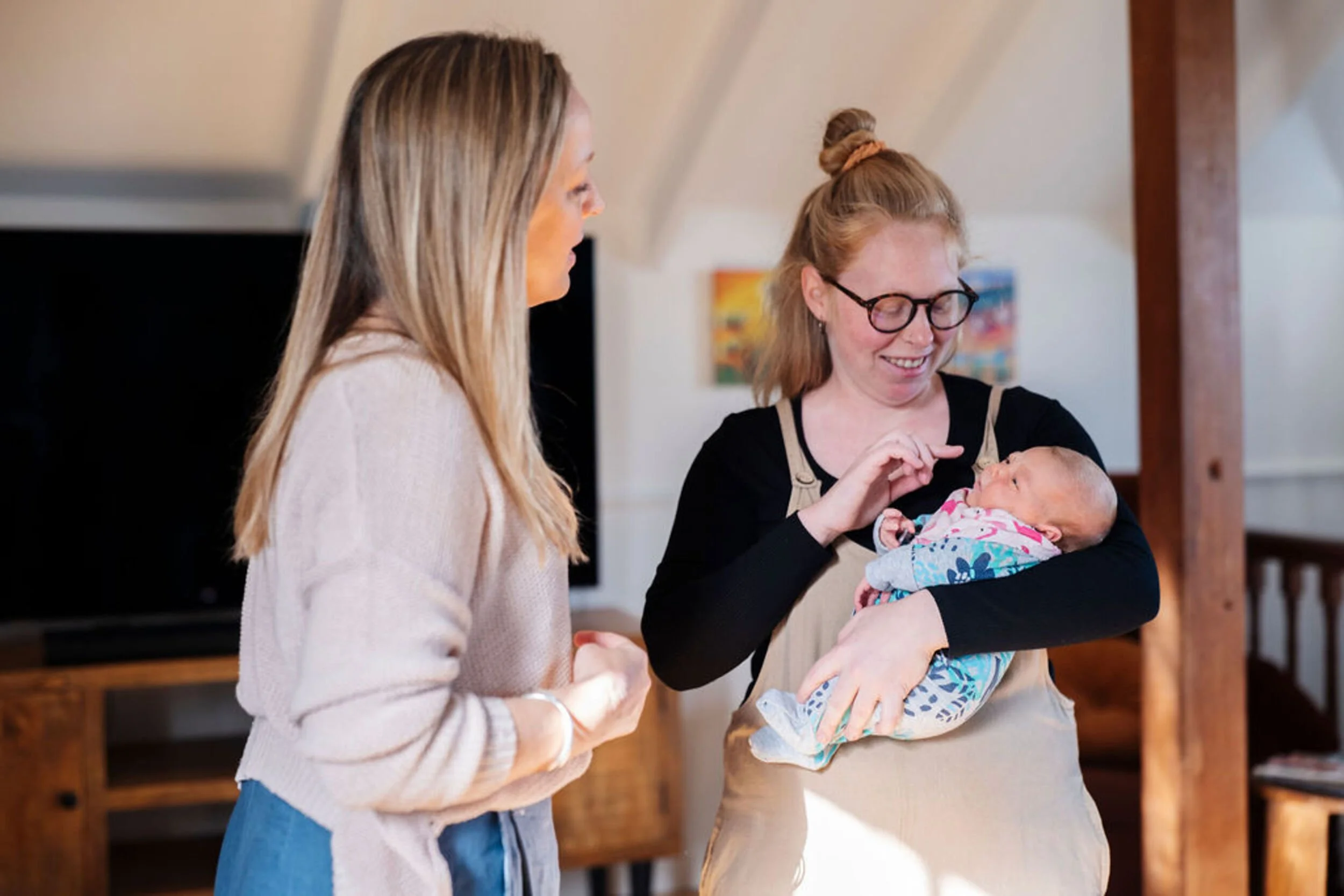
What postpartum care could be
Around 280,000 women give birth in Australia each year. Every one of those births marks the beginning of a postpartum transition. We want to ensure postpartum care is recognised as an essential component of women’s health policy, improving experiences for birthing people and their families.
Postpartum is often treated as a short period of physical recovery ending at six weeks. But becoming a mother involves profound biological, psychological, emotional, relational and cultural change that continues far beyond six weeks. The World Health Organization reports that more than one-third of women experience health problems caused by childbirth that persist for months or even years. Maternal depression is more common at 4 years postpartum than at any time in the first 12 months.
We hear a lot of stories from mothers who had a challenging postpartum time, and the challenges arise from a systemic lack of support, not from anything those mothers are doing wrong. Australia does not lack evidence that women need better care after birth. Australia lacks a coherent system for delivering it.
We have services, professionals and pockets of excellent care. But access often depends on where a mother lives, what she can afford, whether she receives the right referral and whether her needs are considered serious enough. It’s too easy to fall through the gaps.
We don’t even have a complete national picture of what happens next. Australia’s principal national perinatal collection focuses on pregnancy and childbirth, with postnatal data outside its current scope. The AIHW also reports that there are no national data on perinatal mental health screening, service use or outcomes.
We also hear what a difference good support makes: how it feels when someone prepares a nourishing meal, takes care of the house or older children, listens without judgement, or connects parents with a helpful resource.
When a baby is born, so is a mother. Postpartum can be more than something we just survive. With the right care it can be a deeply nourishing, supported and transformative beginning to motherhood with ripple effects that shape families, communities and generations to come.
What Newborn Mothers is committing
There is currently no dedicated national peak body coordinating advocacy for postpartum care. That means organisations, professionals and community members need to step up and work together.
Over the years, I’ve put aside some of Newborn Mothers’ profits into a fund held at my local Community Foundation. I’ve always thought of it as superannuation for the community: setting something aside during the good years so it would be ready when an important moment arrived.
This is that moment.
I'm immediately pledging $25,000 AUD to go towards campaign management, media, research and community engagement.
I’m also volunteering my time personally, and I’ve allocated some of my team’s paid time to this advocacy work.
What we want Australia to build
Governments are presented with countless urgent problems. If we want this inquiry to produce change, we need to offer more than a list of unmet needs. We need a practical, evidence-informed model that the government can fund and deliver.
We’re envisioning a model in which trained postpartum professionals provide continuity of care at home, local community spaces bring practical, social and health support together, and essential services like lactation support and physiotherapy are offered automatically after birth,
With the next federal election on the horizon, this inquiry gives us a window to put postpartum care firmly on the political agenda and to make sure there is a clear policy solution for politicians to respond to.
Our work won’t end with the committee’s report. We want its recommendations to become a fully funded policy commitment at the election, making this at least an 18-month project.
Add your story
An inquiry always starts with submissions from the public. This helps the committee understand how important the issue is to the community. If they hear from only a small number of people, they might assume it is a niche concern. So we really need to show them this is everyone's issue, and flood them with submissions!
A submission doesn’t have to be long or formal, it can just be two or three sentences about why this issue is important and why it needs more attention from the government.
Your postpartum experience doesn’t need to be recent, dramatic or entirely negative. You might want to describe the care you couldn’t access, or the support that turned things around. Both can help the committee understand what Australian postpartum care should become.
We’ve created a guide to help make it really easy for you:
Learn how to make your submission here
This began with Senator Marielle Smith sharing her story. Now it’s time to share yours.
Together, let’s change the way society values and care for mothers.
Sources:
Parliament of Australia, Rocking the Cradle: A Report into Childbirth Procedures (1999)
Menopause and Perimenopause Inquiry: government response and $64.5 million investment
Australian Institute of Health and Welfare, Australia’s mothers and babies
Australian Institute of Health and Welfare, Perinatal mental health screening in Australia
Australian Institute of Health and Welfare, National Perinatal Data Collection
