
Interview with Wendy Jackson
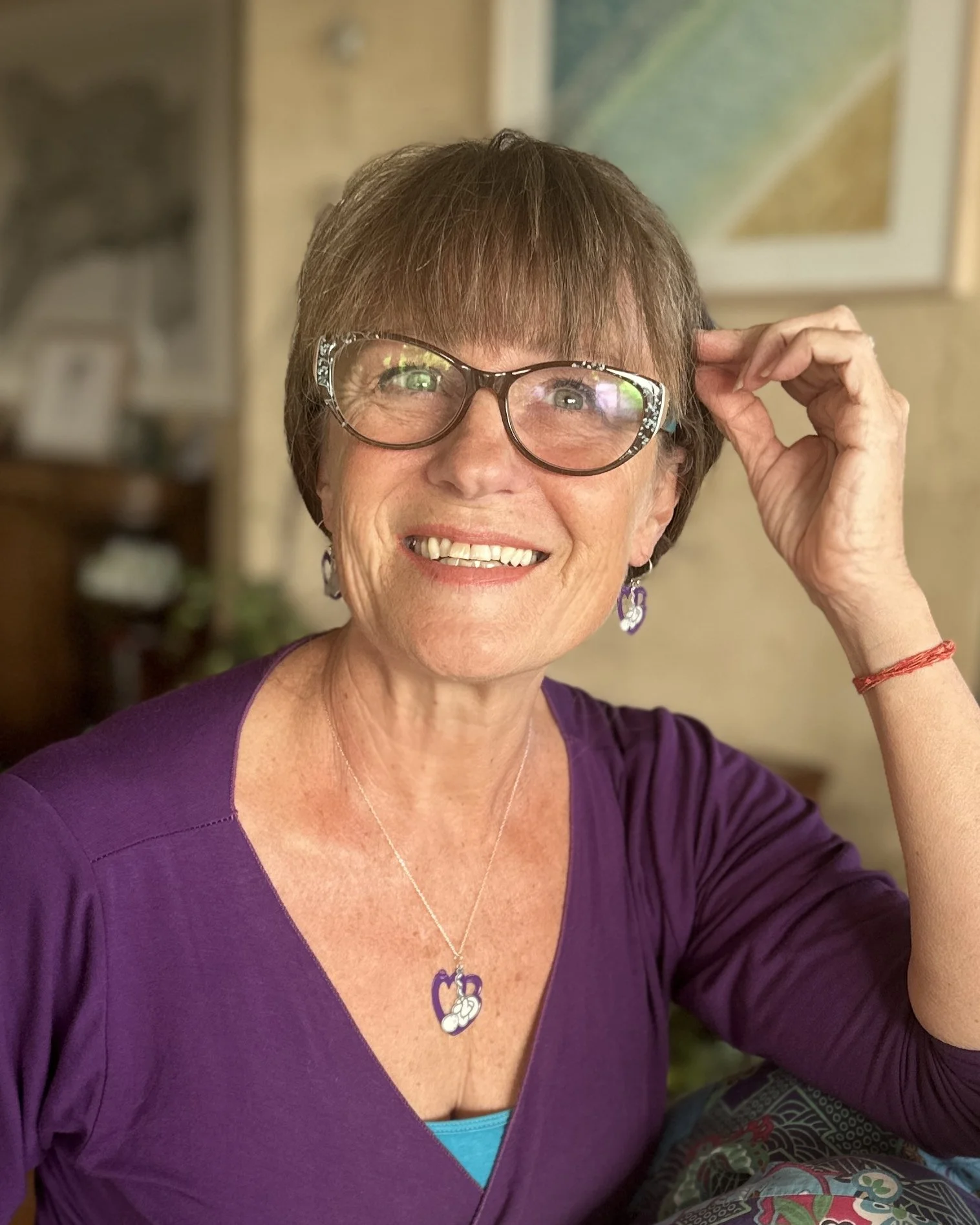
I chat with Wendy Jackson, a retired midwife and author of Mother Becoming. We explore how 30 years of midwifery experience alongside a passion for improving postpartum care led to writing a book for mothers. We discuss matrescence, the importance of nurturing the mother, and how families and communities can help.
Listen Now
About Wendy
Wendy Jackson brings 30 years' midwifery experience in clinical, research, and education to her passion for supporting mothers. After her own birth trauma, postnatal depression and PTSD, she found healing through yoga, later training as a perinatal yoga teacher, matrescence coach and Make Birth Better graduate. A grandma herself, Wendy is the author of Mother Becoming: Empowering You in Pregnancy, Birth and Early Mothering. She helps women advocate for themselves within the maternity system to reduce the risk of birth trauma and PND. To be truly seen and supported on the journey to mothering.
Reach out to Wendy here: https://www.motherbecoming.com.au/
We explore the following questions:
How did Wendy Jackson’s 30 years of experience as a midwife shape her approach to supporting women through pregnancy, birth and early motherhood?
Why does Wendy believe postpartum care is still overlooked within the Australian maternity system?
What is matrescence, and why is it important for mothers and their families to understand this transition?
What inspired Wendy to write Mother Becoming: Empowering You in Pregnancy, Birth and Early Mothering?
Why did Wendy choose to include real mothers’ stories throughout the book?
How can unrealistic expectations and the ‘bliss myth’ of motherhood affect new mothers?
Why does Wendy believe mothers need better access to trustworthy, evidence-based information during pregnancy and birth?
How can informed consent and advocacy help women feel more empowered within the maternity system?
How can the birthing environment, including movement, lighting and privacy, influence labour and birth?
Why are the first few hours after birth so important for bonding, breastfeeding and a baby’s transition?
What kind of practical and emotional support do mothers need during the first days and weeks postpartum?
How can stronger community, professional and intergenerational support improve the postpartum experience?
If you love this podcast please subscribe leave a 5-star rating and review wherever you listen!
Transcript
Julia Jones:
Hello and welcome to the Newborn Mothers Podcast. Today we have Wendy on the show. Wendy, I've met you around and about in Perth a few times, you're local to me.
Wendy’s a retired midwife and spent 30 years as a midwife, but is now working - well, you can tell us more - but lots of beautiful advocacy work in postpartum care.
And you're the author and illustrator of a beautiful new book called Mother Becoming: Empowering You in Pregnancy, Birth and Early Mothering. So welcome, Wendy, do you want to let us know a little bit more about yourself?
Wendy Jackson:
Yes, what a lovely intro. So I'm mum of two and I'm now grandmother to a beautiful little boy who's nine months old. So that's been an amazing experience.
I’ve been a midwife in all sorts of roles, also as a health professional educator, teaching and supporting my colleagues and becoming a yoga instructor, working in pregnancy and birthing and postpartum mothering space. I then became quite unwell with an autoimmune disorder and had to work less and less and less. I found that very distressing because I absolutely love midwifery. Such a passion for it, of being with women and supporting them and helping them to see the value in themselves, the strengths in their bodies, to advocate for them within the hospital system and to help them prepare for the need of support and reaching out and preparation for the postpartum period, because that is just as important as in preparing for birth, if not more important.
Because within Australia, postpartum is a Cinderella service. It's literally just dropped. We just allow mothers to walk out of the hospital. They have a few visits. Breastfeeding is very poorly supported.
What it is, the transition that a mother will go through as she becomes a mother is not fully explained. How they think, they feel, how they act, what to expect, that their actual brains have been completely rewired. And you can see this difference on an MRI between a woman who has birthed and one who hasn't.
This amazing process that we actually have a word for it: matrescence, like adolescence, all those physiological, psychological, emotional transitions that you go through over a long period as an adolescent is like a crash course as you become a mother. And understanding this and allowing family to understand this and support this as well is really, really important. Having that preparation for food and that visitors become helpers. They're not there to just hold the baby for you to serve in tea. Those visitors are there to serve you, provide food and tidy up and not expect anything.
And that you allow this time, this three-month period, and it goes on for so much longer, especially that to recover because your body has been through so much no matter how you birth. And that's a big thing as well, that there's no judgement here on how you birth or how you feed. It's about nurturing and supporting women and mothers so that they can arrive after that postpartum experience as emotionally and physically well as possible.
Now, when I became unwell and not able to work, I thought, what am I going to do with all this passion, this knowledge? And during meditation, I thought, oh, I'll write a book. And so from that, this amazing organic process unfolded where mothers that I had known, whether it had been birth support, their midwife or a yoga instructor for antenatal and postpartum yoga, I asked them if they would write their stories.
And the tangibility of real stories of mothers is so important because we're so often sold this bliss myth through social media that mothering is going to be this amazing experience and that you're going to be able to do and have it all and you're going to bounce back and you're going to look good and you're going to have a tiny home and you're going to be feeding properly and your birth will be lovely and that just isn't how it is. That's not reality. And the reality is what needs to be placed out there.
And so this book, it's written in such a way that it's quite big, but you pick and choose what you want. I've made this tree of matrescence where there's all this knowledge and there's four sections, four main roots.
And so you could look at the physical side all through antenatal birth and afterwards, and then it's got meditations like reconnection to your body and finding that power and strength in yourself and that you don't self-silence and you ask for help and that you know that it's okay to ask for help, but you're not less for that, but it's needed and required. And you can go through all of that part or you can just look at the contents and then this thing that suddenly comes up, “spritzy bits.” What’s that about? Well, it's this little recipe that if you've got a sore perineum after birth, it's like this little bottle of mixtures that you can spray onto pads and you wrap them up and they're in the freezer, ready to go for that cleanliness and feeling afterwards. And then they're lovely and cool for that all important first poo. Nobody tells you about that.
There are so many things that are within that book that, again, I can say you can just pick and choose from. And there's also the history, although it's turned, it's her-story, it's our story of how we got to the system of birthing that we have today that tragically we now have one in three mothers coming out of this hospitalised system who are traumatised by themselves. And then one in 10 of those mothers experiences post-traumatic stress disorder, and one in five mothers experiences postpartum depression.
And they're the ones that we know of because there's so much, as I've said from this pressure of social media that you shouldn't be doing at all. Mothers are then self-silencing and in isolation, feeling this shame and fear of stigma that they aren't coping, that they're not enjoying being Mum, that it's hard, that they're utterly exhausted. And yet there are so many mothers doing this in isolation and they don't need to be in isolation.
There needs to be a network, a way of connection and reaching out so that you can talk honestly without fear of judgement. And where you can actually go for help if you have experienced birth trauma or you are experiencing antenatal, postpartum anxiety, depression, and also depletion.
And very much that it's information that has been trauma through so that it's there and available and there's the research and evidence behind it so that it's trustworthy information. I've done the hard work, it's done, it's cherry-picked, it's there for the mothers. So that they can realise that they deserve so much better that is currently available and how they can navigate birthing, pregnancy birthing, postpartum as it currently is, and how they can improve this for themselves, how they can speak up for themselves, where to find support. And it's written in a very non-judgmental way.
There is an offering of information. So I write about a section and yes, there's the research, but then there are all these goody boxes that have podcasts and YouTube videos and blogs that are easy to access. And I've placed those on a website. I put them down as a wishlist.
At the end of every chapter, there is a wishlist of seven things that I really love mothers to know. And there are seven chapters and each mother writes their letter to introduce a chapter. So there's the early months, there's the middle months, there's the later months, there's physiological birthing, like the birthing where there isn't any medication or any kind of medical interaction. And then there is birthing with assistance because sometimes we do need assistance. We have low placentas and there's no way that baby's getting out that vagina with the placenta in the way. And so then it's about planning a beautiful caesarean birth and celebrating that as a birthday. There's at the end of every chapter also.
Oh, sorry, that was assisted birth with Katie. And then that one also does talk about the reality that there is obstetric violence and that it's important that you have autonomy and advocacy over your own body and you talk about informed consent. And so nothing is done to you that you do not wish to happen.
And then it's also preparing for a very, very mindful way that if changes do happen, you are part of this process and you have a birth mapping journey where you can plan for different events birthing-wise. Maybe you do need an induction if you have developed pre-eclampsia. How might that unfold for you? And how is it that you can work with other beautiful processes that can empower you with that and make that the best possible experience for you?
At the end of every chapter, there is a how might it be for you? And so it's all the questions. How might it be for you if, say, the estimated due date, we learn that it's not suddenly 40 weeks, that due date is between 37 and 42 weeks. And when a hospital wishes to fit you into their timely system of saying, oh, 40 weeks, let's just make it a point for you to be induced within five days, 40 weeks that's five days.
And you say, actually, excuse me, my body and my baby are not saying that I'm ready for labour because your baby does actually communicate to your body when they're ready to be born. And there's all these physiological changes that happen within your body that are preparing for labour and birth. And we are actually denying that process for many, many mothers by inducing before the body's ready.
Julia Jones:
I just want to interrupt you because I'm just noticing how beautifully you are weaving both your clinical experience as a midwife in with these stories and personal experiences. It sounds like, I know you describe yourself as an unhappily retired midwife, but really it sounds like you are still doing midwifery work just in a different way.
Wendy Jackson:
Yes. I think this work was really important for me to actually get this information to mothers before they get pregnant, when they're pregnant, or if they have had an experience that really wasn't pleasant for them, they've experienced postpartum depression, how they can actually make changes to have a better experience next time, or how to prevent things happening in the first place. Because there's so much information that mothers are not informed about.
We have a very fractured maternity system where mothers go into the hospital, they see many different midwives. There isn't that continuity of care. There are so many processes and investigations that are done that aren't actually adequately explained. I mean, things like the glucose tolerance test, we actually don't have to routinely have it. And the group B strep, like the group B streptococcus test where we do a swab of the vagina around the anus at 36 weeks, that actually was dropped.
That practice was dropped as a generic standard for everybody years and years ago in many European countries because it was found in research that it wasn't actually necessary because 20% of women have GBS in their vaginas at any one time. And they might come up positive, but then at birth, when they're ready for birth, it may not be there. And yet we then say, "Oh, you're positive you need to have antibiotics."
And so you're then hooked up to the system of drips for antibiotics, and that interferes with your mobility. And mobility is a huge thing that I would go into because we don't allow for what we call mutation of the sacrum because we're always putting women on their backs on beds. Now in labour, as the baby descends, our incredible pelvis is actually designed so that the sacrum, that bone at the back of the base of the spine lifts out, it mutates, and it makes room for the baby's head to come in and rotate.
And if you are on your back, you're stopping this base from happening. And so it delays this descent and rotation. And so it lengthens labour and it makes it more painful. And then we say, "Oh, your labour's slowed down. We need to break the waters or we need to start pitocin on." And we have this cascade of interventions where my advice is that you ask for the bed to be just put to the side and you just don't go on it. And you use props, things like that. And all those postures, it's all there.
It's all in the book and all the links to help with that rotation descent and process of labour so that mothers can be as physiologically present within their bodies. And even when induction is needed, that they're not on the beds, that they're actually on the board leading forward to allow this space, this process to unfold, and that there's touch, massage, the lights are down.
Because our mammalian brain, we need to sink right deeply into our near cortex and mammalian brain so that oxytocin is allowed to flow so that contractions can happen. And we then get these beautiful endorphins of natural physiological pain that comes into the mother and you can see them between contractions. They're like, oh, wow. They're just completely spaced out and deeply within themselves. And then the door opens, lights on. Oh, not safe. Adrenaline comes in and adrenaline then reduces cortisol and it then interrupts the mother.
And this process is happening all the time within the birthing rooms within a hospital environment. We need to actually respect a birthing room as a really private sacred space where we quietly knock on the door and then we quietly ask permission. It’s things like low tone voices and low lighting because that's the environment that we actually evolved to birth in.
And if there's anything that happens, that light, danger, with adrenaline, the labour stops, the mother moves to a safe space.
Julia Jones:
I love that you've woven that all through the book because the book structure has that early pregnancy and late pregnancy and then a physiological birth and an assisted birth so people can read through it. But within each of those chronological structural elements is also some of the influences, the physical, hormonal, emotional influences, the cultural and historical influences and so on.
I think that's really a valuable way to look at. But also, like you mentioned, they all start with a personal story, which I think makes it so much more enjoyable to read and so much more relatable. But obviously the particular chapter that I like and that I'm the most interested in is the early mothering and the fourth trimester. So do you want to talk a little bit about that part of the book as well?
Wendy Jackson:
I've actually put in chapter six the first few hours and days. So important. And we neglect the importance of that deeply. We desperately need mothers to be able to hold their baby skin-to-skin in those first few hours because the physiological bonding processes that are going on for both the baby and the mother are so important.
I can't emphasise that enough for the future unfolding of bonding, connection, communication, awareness, breastfeeding. Now a mother, after she's laboured, her chest is flushed. Physiologically, it's warmer than the rest of her body ready for that baby to be there. That eye gazing, that connection, the mother gazing at the baby. The baby already knows the mother's voice and literally has come into this environment where it's quiet, it's calm, it's not bright lights, it's not noise, cold; it's warm, it's quiet. We've got this time.
Because through that process of being with the mother, that baby's circulatory, respiratory, and neurological responses are wired to adapt to that very well. And in many, many hospitals, we actually remove the baby and we do all our checks because there's no time or the paediatrician, private system. Everybody's there.
We don't do that. Where even with a caesarean section, we need that baby on the mother's chest as soon as possible. Do the observations there. There's no need to do it in a cot at the side. Always keep them together and allow the mother to see what it is that's going on.
And then for that first movement to those first feeds to get that colostrum, so important because that colostrum is providing so much health and nutrition to the baby, and it is colonising their gut in such a way that it is priming them for a healthy existence and growth.
And then as I say, those first few hours, your body feels sore. The abdominal muscles are really separated. Everything feels completely out of place and floppy and jelly-like. And there's like no pressure and you're desperate to have this first poo. So I think get a pad, place it on your perineum gently. You lifting your feet off the floor and you're curving your pelvis and gentle pressure just allow gentle pushing to have that first poo.
Nobody tells you about all of this and just how uncomfortable it can be. It's okay to have some pain relief and regular pain relief so that you are more mobile, especially if you have had a caesarean birth, because that mobility, early mobility improves healing. And then when we're first home, it's like you're in this bubble.
We expect in our Western culture, our babies to sleep at night. They don't. They've been in this beautiful warm environment in the mother where they've been sleeping for 40 minutes and then awake 40 minutes and then awake. And so they're waking every few hours. Mum, where are you? Warm. Need to be safe. Nourishment.
And we need to take that clock away, remove clocks, be in this bubble of night and day that is one consistent bubble. It's not separated.
In Eastern cultures, the child stays with parents. Whereas we later have been told that the baby needs to go to bed and settle. And then there's this crazy thing that this baby's going to go for 12 hours so that we can sleep. No, they need to feed and be held and warmed and nourished. And co-sleeping, we can do safely. We've got the seven steps of safe co-sleeping and babies want to be with their mother.
We are mammals. We are carrying species. We’ve got so many gadgets to separate us. A baby who is being held and comforted is a baby who is more settled. They're crying less. And you are learning more the instinctive cues of your baby's needs.
Nourishing the mother, keeping the mother warm, so important. Mum's not sourcing and providing food. That's taking away her time, her energy. She needs to be resting, recovering from pregnancy, from the birth, from blood loss, from surgery. She needs to be fed and nourished regularly with snacks.
And if she's in her pyjamas all day, it doesn't matter. She doesn't need to feel that she needs to be dressed for any visitors or anything. Those first few days and weeks are so precious for the bonding of that family and the father and parent partner as well, getting to know their baby and that rest during the day, nutrition. And then you've got your midwife coming in, having a postpartum doula with somebody therefore is beyond valuable. Having a beautiful massage, just helping with the lymphatic system and drainage, having somebody, having a list where if you're having any issues with breastfeeding, that you've got already, these numbers are all there of a lactation consultant, someone you can call, someone who can visit and help you with that.
Because how important is breastfeeding to you? You need to think, how important is it to me? Do I really have to do that? Yes. Well, actually, it takes a month to establish breastfeeding. It's a 24-hour job. It's hard work. Your body's working constantly. You need the time and energy to do so, and you need the respected space. So again, that's when visitors become helpers.
And here, Julia, you are so passionate about this postpartum space. So please jump in, add in, because your expertise and knowledge is so valid to back up everything I'm saying. Please go through and add some more.
Julia Jones:
Oh, no, it's beautiful, everything that you're saying. I mean, I agree with all of it. I love the way that you blend all of it together, with even talking about the media influencers, and the matrescence kind of identity process that people are going through for each of those stages.
But what I would actually love to know is what's next for you or what's next for the book? This has obviously taken you a long time to bring all of this information together, plus your 30 years of experience in midwifery. Do you have more plans for this book or for after this book? What's next?
Wendy Jackson:
I do. I have sent it to a publisher to ask to collaborate with them to make a pocketbook. So it's a very quick reference book that’s very easy to read. And then if you want more information, you could always get the bigger one.
I'm doing quite a bit of voluntary advocacy for mothers who need someone to talk to. I've actually started retraining in a 500-hour hatha yoga so that I can get over my thousand hours of training to register as a yoga teacher trainer because I really want to teach. This was the other dream when I finished, when I had to stop midwifery, was to write the book so that I could reach mothers and still do it through yoga.
I want to create an amazing teacher training programme that incorporates all of this to teach yoga teachers the pregnancy, the birthing, and the postpartum yoga, and to get all this information in early. And one of their assignments would be: in your area, I want you to write down all of the support that that mother can find, like the free digit foundation if they need the telehealth link, if they are for 10 sessions. Yes, they need a GP referral, but if they've got anxiety and postpartum depression, they've got somewhere to go.
If they've got all their library links or the toy library, postpartum, any doulas, any midwives or lactation consultants, paid groups, everything that can support the mother in their area that they've actually got that. And it's handed out to the Mums at the very, very beginning of the pregnancy yoga experience. And we need to bring back these groups, mothers' groups and supporting mothers groups and having intergenerational support and wisdom and nurturing the mother.
Nurturing the mother is so important. We don't value it enough in this culture. We've lost it. We've completely lost the importance and to acknowledge the hard work that mothering involves. We need to bring that back and to have spaces where mothers can come there and be non-judgmental, be together, learn from each other, learn from others, and nourish them.
Julia Jones:
I love it. It's so beautiful. It really sounds like even though you can't work as a midwife anymore, you still really have this burning purpose and passion. And I love the way that you are creatively, like mothers do, finding a way forward with the resources that you have and you find a way to make a difference.
Wendy Jackson:
Be with women. That's what midwife means, to be in a different way. A book, yoga, personally.
Julia Jones:
Well, it's been really beautiful to hear from you. If people are interested in buying your book, Mother Becoming, it's available at motherbecoming.com.au. We'll leave the link under the show notes on our blog. Thank you. Do you have any last messages or things to share?
Wendy Jackson:
It's available on Amazon as well. And yeah, just to pick and choose what it is that you want from it. But I just want mothers to know that they deserve so much more than is currently available, that they are worth so much more than is currently acknowledged. And just to send out this passion and this love that is so important.
Julia Jones:
Thank you so much for sharing. And we'd love to see more about where this journey takes you as a midwife who's not practising as a conventional midwife.
Wendy Jackson:
Thank you, Julia. Thanks so much. And I'll just let it organically unfold and watch this space. But your opportunity to speak with you is so lovely. I've actually wanted to do this for years.
Julia Jones:
It was a long time to get this podcast together, but I'm glad we finally did it. Thank you.
