
Creating a trusted referral network for holistic postpartum support
Interview with Mazz Napier
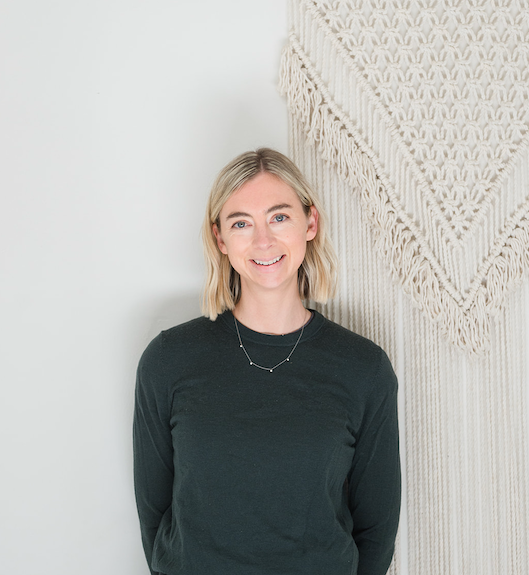
I chat with Newborn Mothers graduate Mazz Napier from The Bond Wellbeing. We discuss her transition from brand marketing to postpartum doula work and how she built a sustainable business. We explore practical and emotional care as the foundation for maternal confidence, community connection, and a lasting village of support.
Listen Now
About Mazz
Mazz is the founder of The Bond Wellbeing, a postpartum doula, infant massage instructor, and mum of 2. She guides mothers and their families through the transformative fourth trimester and beyond, offering prenatal support, in-home postpartum care, baby massage courses, and community events. With a focus on holistic care, Mazz empowers mums to embrace motherhood with confidence, connection, and support.
Reach out to Mazz here: https://www.thebondwellbeing.com/
We explore the following questions:
What inspired Mazz Napier to make the career change to postpartum care work?
Why does practical and emotional support make such a difference for new mothers?
What doubts did Mazz have about becoming a postpartum doula?
How can small steps lead to a meaningful career change?
What did Mazz learn from working with her very first clients?
Why is building a trusted network of lactation consultants, women’s health physiotherapists and other practitioners so important?
If you love this podcast please subscribe leave a 5-star rating and review wherever you listen!
Transcript
Julia Jones:
Hello and welcome to the Newborn Mothers Podcast. Today I have Mazz on the show. Mazz is currently based in Sydney and is a postpartum doula who trained with me about four years ago.
Thank you for coming on the show. Do you want to tell us what was going on in your life, say, five years ago that made you think, I want to do this, I want to make a difference in the lives of postpartum families?
Mazz Napier:
Sure. Thank you so much for having me here, Julia. Five years ago, my son had just been born, my second, and we'd moved. I had had my first in London, actually, and then we'd moved back to Australia. I'd had Dylan, and I was really ready for some kind of career change. I remember going on maternity leave, before I had Dylan, and thinking, like, I don't think I'm coming back to this job. I was working in brand and marketing; that's where I'd built my career. and actually feeling quite stressed about it, thinking like, "I don't know what I'm going to do next, but it's not this."
But then actually, having that time—and I actually say this with a lot of my clients—having that time and space away from paid work when you are a mum, a lot of creative juices are often flowing. And so I was kind of considering all the options and what I might do. I guess my eyes had been opened about postpartum and this whole world when I had my daughter, who's now seven, but I'd just gone back to my old job, in between having the two kids.
But I was ready and open for something, some kind of change, and already feeling quite passionate about postpartum. I didn't really know too much about doulas, and I didn't have a doula myself. There's a funny little story. I'm not sure if you want me to share this anecdote about…
Julia Jones:
Oh yeah, I love anecdotes.
Mazz Napier:
…studying your course. My son must have been eight months or so. And I was out at the post office. I don't know if he was with me or not; I can't remember, but there was a mum lining up to get passport photos done for her newborn, a very stressful kind of event. It was quite a hot day and I could see she was really flustered. She was having to fill out these forms. The baby was crying. It was this really stressful situation: a long line at the post office. And I was just like, "Oh, this mum just needs a bit of help."
So I just went up, and I was like, "Do you want me to hold your baby for a little bit?" And she just looked at me like, "Oh my goodness, thank you so much." She was like, "Yes, please." So I just held the baby, soothed the baby.
She got what she needed to do done, and she just looked at me when she'd finished, and she was like, "Can you come home with me? Like, I wish I could take you with me." And it just felt like, I was a mum myself with a small child, but I was like, "It feels so good to, like, help another mum. I get it, and I can see that need there."
And then I came home, I was cooking dinner. I was listening to Tales of the Fourth Trimester, Naomi Krisalakis, who I know is one of your graduates. And ironically, I've since told this story on her podcast as well. I was listening to her podcast, and I was like, "She's a doula." I was like, "How do you become a doula?" And then I just started looking into her on her website. Then I saw Newborn Mothers, and then I found you, and then here we are.
Julia Jones:
Oh, I love it. That's so hilarious, just such a small thing of holding another baby. But, you know, it is so important because we often think of postpartum as a purely medical event. And I'm like, no, the practical support, just having those extra sets of hands around to help with those day-to-day tasks just makes a world of difference. And obviously, that mum felt it in that moment.
Mazz Napier:
I think it's the practical, and it's the emotional as well. I see how much of a difference the practical tasks do, how much they help and support, but then it's that being there for another mum, seeing them, validating what they're experiencing. That is this intangible thing, which I think is the most valuable, actually.
Julia Jones:
I totally agree. And it's so much less quantifiable because you say you held her baby, but obviously, what that mum received was so much more than that, but you couldn't really name it.
Mazz Napier:
It is this kind of intangible thing.
Julia Jones:
Did you have any doubts? Did you just dive straight in, or were you worried about, like, is this a real career? Am I going to be able to get clients? Will I make money from it?
Mazz Napier:
So many doubts. All the doubts. I had a lot of doubts, and initially it was just like, this is some crazy pipe dream that I will actually never do, but I'm just having a daydream about it. But then I just started to think your course made it feel very real, that it was something that you could do; you could build a business; this could be my job, my career, and now it is, which is kind of crazy to think.
Myself back then probably never would've believed it. It was actually probably a credit to my husband. He's always the kind of cheerleader on the sidelines. He was like, "Just study the course." He's like, "You don't have to become a doula necessarily. Why don't you just do the course and see how you feel about it?" and I was like, "Okay. Yeah."
And actually, when people ask me now, because they're like, "Whoa, how do you have such a massive career change?"
It's almost like people think you just dive in and you've just done this one big thing. But actually, it's less exciting; it's more just a series of small steps towards creating something that eventually adds up to being a big move.
Julia Jones:
I really love that, because I think that does hold a lot of people back. They think that they have to do everything all at once and decide all of the steps right now. And it's not actually possible because you don't know exactly how things are going to turn out, what you're exactly going to like, but you can just start a little course on maternity leave and then when that finishes, then you can decide to go back to your other job and go, “Yeah, nah, not for me.”
Or you might not, and it might end up like you, where this is actually your real career now. That's so amazing to look back and think that you thought that was a crazy pipe dream, but because you did take those little steps. Here you are, four years later. Whereas I'm sure there are people on my email list, people listening to this podcast right now who've been thinking about doing this for four years and haven't taken that step.
Mazz Napier:
Yeah.
Julia Jones:
I just think those small steps, they really do add up.
Mazz Napier:
It is about the small steps. And also knowing that it's not going to look perfect; it's going to be a messy kind of journey. Because I did go back and forth. Once my son was getting closer to one, I was like, "Oh, maybe I can go back to my old job, and I'll do two things at the same time. You know, I'll just do a couple of days in my old job just to have that security, and then I'll be building the doula stuff on the side."
But I also wanted to work part-time because I wanted to be more present, like, with the kids when they were little. So I was like, "I don't think all of this is going to add up." and then it kind of dawned on me. I was like, "Okay, I can try and do two things at the same time, and it'll probably be a really slow burn to get the doula business off the ground and see if it's going to be a real thing.
Or at that point, I can go all in and be like, go through it quickly, experiment, and see if it's going to, you know, be enough to kind of be a sustainable business?" And so that's what I then decided to do. But it was kind of a lot of back and forth and figuring it all out. it, you never look as messy.
Julia Jones:
Yeah, that's right. So you never went back to your marketing job, that was it? And what was your first step? Once you kind of went through all those murky areas you've decided to study, and then you decided, "No, I'm going to go all in. I'm going to give this a real shot." What did you do? I guess it helps you have that marketing background. You probably had a bit of an idea about how to brand your website and create content and things.
Mazz Napier:
That side definitely helped. Also I'd say I felt pretty confident having a blueprint for starting a business from your course as well. It wasn't just about how to be a doula; it was that business side that gave me a real kind of boost of, like, steps to take. I started to build the website, build out my offerings, packages, and then even though I know you always said don't work for free, I was like, "I'm going to experiment with three people." I was, "I'm going to do three experiment clients and just test out my services, in return for a testimonial where I could, you know, use photos, have little case studies and really talk about my experience working with them as a doula." And I actually found three people really quickly to work with.
And so then when I launched, I launched with three testimonials. I'd kind of ironed out a few little things that I wanted to change about my services or saw what was working well, what was tricky. Because a lot of the time, you're kind of dreaming it up at home and on the computer, and then when you translate it into real life, you're like, "Ooh, this isn't working so well, in the kitchen or, you know, just balancing all different things. It's just like being a parent that you can read the book, but only when you try it with your kid…
Julia Jones:
The only way you can figure it out is to just get stuck in there, get your hands dirty.
Mazz Napier:
Yeah, exactly. And there was a bit of, or probably a lot of, faking it till you make it type thing, and just feeling like I'm not confident yet, but I'm going to do this anyway. And from doing it, from the experience, that's where the confidence came from. And then seeing how people responded to the services, the support that I was offering, that just fueled the passion and whoa, this feels so good to be able to support people in this way. And to see how needed it was and how grateful people were for that kind of support, really spurred me on to then be like, "Right, let's go."
Julia Jones:
I love it. So you started the course in 2022. Did you finish the course quite quickly and start your business quite quickly? I mean, it feels like you did.
Mazz Napier:
I think I finished it in, like, around May 22. I was looking back to see when my certificate came through. I think it was about May, and then July, I had my first.
Julia Jones:
You were very quick. You did it in just a couple of months, I think.
Mazz Napier:
And because once I started that was my first time away from the kids. Luckily, I had my mum who would come and look after Dylan for a few hours on a Monday. I'd sit down, I'd do the study, and it was giving me so much energy. I just loved it. Everything just really spoke to me, all of the content.
Julia Jones:
I love hearing that because, I mean, obviously, I love this, and I get so obsessed with all of these amazing topics that we can learn about in postpartum care, but it is one of the things that delights me the most is when I hear my students saying that they. Not only they liked the outcome of what they learned, but they enjoyed the learning process. I just can't get enough of learning about our brains and our bodies and the amazing things that mothers can do.
Mazz Napier:
And also, it really aligned with some core interests of mine. I'm a psych undergrad, so I didn't go on to become a psychologist, but I did my undergraduate in psychology. So the brain, how it works, everything to do with the maternal brain, I found so, so interesting and loved. Also, I've always loved food, nutrition, wellbeing, so I love that side of it as well.
And then I'd also, since becoming a mum, started to get really interested in attachment and how we relate to our babies, how they relate to us, that kind of growing relationship. So it combined all of these passion areas of mine. I think that's why I found the content really interesting, and then also being like, "This would be really cool if I could do this for work."
Julia Jones:
So you were telling me, you finished, you finished the course. It sounds like you really devoured it quite quickly, and then started your business. Did it take you very long then to, you obviously had your first three clients for free? I also did that even though I tell other people not to do it. Everyone does it, I think. How was it getting that first paid client, and was it then pretty quickly your income, or was it shaky for a while and you still weren't sure if it was going to really work as a career?
Mazz Napier:
It built slowly over time. I think the first paid client came from my own network. I was chatting to friends and everyone about what I was doing; people were interested, and it was a friend of a friend who was the first paying client. Then what I did was a little exercise where I was like, "I'm just going to offer some free postpartum planning sessions and just kind of put it out there to my very small Instagram following." I shared it in a few other places as well. And so then I started to have a few short one-on-one planning sessions, which were initial get-to-know-you, talk a bit about postpartum, educate people a little bit about planning for postpartum.
And then I started to get some clients through that. Again, you know, on reflection, probably wasn't the best use of time because I know you talk about doing, like, a group free planning session where you can speak to maybe 10 people at once. I was doing these one-on-ones, so it was relatively time-intensive, but actually going through that process really helped me to kind of hone, like, what are people interested in, what are their fears, concerns, worries? It was almost like market research of what is my target market really thinking about and concerned about where are they needing support and care? So that landed me clients, but also just helped me to kind of expand my understanding of the pregnant mums, the families that I was working with.
Julia Jones:
I think it's really, important that step, and a lot of people miss it, because once you do go through that huge learning journey about, you know, the brain and the bonding and the body and all of the changes and matrescence and that kind of thing, you actually are speaking a different language than a pregnant mum for the first time. You need to then reconnect: where's she at and what's she dreaming of, and what's she worried about. It's so important to keep speaking to her and not to, to lose that memory of what that feeling was like the first time around before you knew all this stuff.
Mazz Napier:
So true. I think you're right. You start to talk this language, but then you can't lose touch with how the mums are actually experiencing it for the first time. Also, with their partner, what that dynamic looks like: how does the partner feel about support? I was doing those planning sessions with mum and partner, so I kind of got to understand what their worries and concerns are and how the mum's always the centre point of my care, but knowing there are layers of partner, siblings, extended family. That was a really good step. I then built a network of practitioners that I got to know because knowing that my role was non-medical, where my support would start and finish, it was really important to me to be able to refer to the right people at the right time. So, connecting with lactation consultants, who also felt very aligned with my approach, women's health physios, chiropractors, a real holistic network of people who as I say, were kind of like-minded in their approach of caring for mums and families.
That kind of helped to have referrals flowing both ways as well. It's also really helped to build my understanding of a holistic way of caring for a mum and baby, because in building very close partnerships with lactation consultants, for example, I've learned so much about supporting breastfeeding, all the different red flags, how to troubleshoot little issues when they pop up, because I'd always when referring a mum to a lactation consultant, always be kind of, like, debriefing with that lactation consultant to be like, "Hey, what did you spot? How did you support that? What can I do to continue helping this mum during my sessions?" So I've really benefited from being able to work closely with all of these different practitioners because I've built my own knowledge base as well.
Julia Jones:
I love that. And you've got a really broad ecosystem that you work within too. I even noticed there's dance, tea, Ayurveda, there are so many different things, photography. And I think that's probably one of the big reasons why you've had this steady stream of clients, because you're not only referring your clients to them, but they're also referring their clients to you, and you can provide better support, all of you, because you're working in this kind of village of care.
Mazz Napier:
Yeah, definitely. My clients often say that that has been really valuable. Once they build that trust and relationship with me, being able to get a recommendation from myself, feels really good for them, because they're like, "Okay, I trust you, so I'm going to trust who you're then referring me to." So that's also why I put a lot of care and effort into it. In relation to who I do partner with, because I'm not going to be just referring anyone and everyone. There's got to be a similar kind of philosophy and care and approach there.
Julia Jones:
Yeah, so they know they can trust your recommendation. And I notice as well, you've set up lots of discounts, so that if people do want to, use one of these practitioners who's in your network, they might get a 20% off their first visit or something like that. And do you do that in reverse as well?
Mazz Napier:
Not exactly, because it's quite hard to discount a big package.
Julia Jones:
Because I imagine a lot of their offers, unlike yours, are, like, a discount off the first session, but then you're going to pay full price for 10 or whatever.
Mazz Napier:
Exactly. So it doesn't work quite in the same way. I offer a free initial consult, so I'm always happy to spend that initial time chatting to a new potential client, getting to know them, getting to understand them. But no, I don't discount my packages.
Julia Jones:
It's good to know you don't need to. That's valuable. And these people, have you just approached them all and asked them to do this?
Mazz Napier:
I did a lot of that at the time. Yeah, a lot of reaching out, lots of emails, lots of catching up, let's grab a coffee, getting to know people, in my local area, but then anyone that I was really admiring their work, what they were doing, how they were working with clients. I found a lot of practitioners being very receptive, very keen to connect and build that network and community. There was a lot of very proactive approaching in those early days, but then it kind of seems to have happened a bit more organically now. At this point, I'm not always actively reaching out to build that network. I guess the network is quite established now.
And just kind of suggesting ways that we could collaborate or offering to contribute content to their blog or run some kind of social media competition together or do an event.
Also events have been a big part of the client pipeline as well. So, prenatal education events where I'd come together with a bunch of other practitioners. We'd do a little panel talk, take questions, that kind of thing. Coming together as a group of practitioners has been really helpful for getting to meet other mums as well, and then also building those relationships with the other practitioners.
Julia Jones:
Now, we've talked a lot about behind the scenes of your business and the business side of things. I'd like to hear, before we wrap up, about what it's like working with mums. From that moment of holding this mum's baby at the post office. What does your daily work look like now?
Mazz Napier:
The majority of my work is in homes with mums, in those early weeks postpartum. It's like a natural evolution. At the start, there is a brand-new mum coming home from the hospital, seeing them within the first week. A lot of debriefing, just really holding space for them, being there for them as they navigate that rollercoaster of emotions at the start. Asking the right questions and really listening, I find very powerful and often kind of unlocks things for them as they're kind of processing this huge experience and change and transition. So yeah, there's that emotional support, the practical support, which is anything and everything that would help the mum focus on resting, recovery, bonding with babies.
I love being able to cook in my clients' homes. I always bring food as well, with an amazing food partner, Made for Mothers. They supply all the food that I bring to my clients. But if my client wants me to do extra food cooking, that's what I do as well. There's always some self-care for mums. I love doing a magnesium salts foot soak with some nice essential oils. I've done some extra training in, like a warm oil Abhyanga massage. Usually, it's whichever part of the body I can get to while the mum is holding breastfeeding babies. So it's a lot of legs, feet, neck, shoulders, that kind of thing. Lots of education on normal newborn behaviour around breastfeeding, sleep, settling, all of those types of things, answering the, like, million and one questions.
Julia Jones:
Do you systemise that at all, or is that just, like, an individual discussion with every family? You don't offer formal classes or anything?
Mazz Napier:
No, although I always do a postpartum planning session in pregnancy where we're starting to touch on those topics. I'm sharing resources on all of those different things so they can start building that knowledge before the baby arrives. And then we kind of lean into whatever the mum's needing the most help and support with. So, breastfeeding can be a massive one at the start. Just seeing what their needs are rather than doing anything too prescriptive. It's quite a flexible approach, I guess. Making sure that they have the right evidence-based resources at the right time is really helpful as well. I guess they're the main things. Also, as an infant massage instructor, I love sharing that with the clients that I support one-on-one in their homes.
I run my baby massage courses as well, which is always a really lovely extension of supporting my clients one-on-one as well, because once we come to the end of a support package, they generally are then coming to my baby massage course. So we get to keep seeing each other for five more weeks. And sharing that experience, but also seeing them kind of establishing more connections in the community, meeting other mums. And something that you always taught, which stuck in my head, was, like, doing yourself out of a job by the time your support package comes to an end. I'm there to provide some very specific hands-on support in those early days and weeks, but working towards the mum having those community networks and making sure, when the support comes to an end, there's not this huge gap when I leave.
Julia Jones:
I've been thinking a lot about the six-week GP appointment recently, about how that should be really the beginning of care, not the end of care, because right now, that's kind of, like, the checklist of, like, "Right, you're good to go now." And I'm like, "No, that's, like, the opposite of what you want it to be." So, in your work, you're trying to make sure, great, she's got a village, she's got a lactation consultant, she's got some meals, she's got some friends, so she knows who the physio is to call. And so, when you finish, you're leaving her with this whole ecosystem of care, not going like, "All right, you're on your own now."
Mazz Napier:
Exactly. I think that's so, so important, just to be continually building confidence and those connections to set them up. I really see that the work that I do as a doula is kind of working upstream from the problem of mums feeling that isolation, loneliness, you know, postpartum depression, anxiety, all those things, which are unfortunately too often experienced in our society, being able to come in at those, from that early point and even in pregnancy, that really sets mum, sets the mum up on like a much more positive trajectory generally, and also just being able to spot any red flags very early on, whether it's breastfeeding, mental health, and making sure they have the right support, and are connected to the right people at those moments.
Julia Jones:
What I'm kind of hearing is we're not treating this six weeks of postpartum as the end of birth, but we're treating it as the beginning of motherhood, the rest of your whole long life.
Mazz Napier:
Yeah.
Julia Jones:
My daughter's 16, my oldest, and I still feel like sometimes I draw on those same kind of skills I learned in very early motherhood. I had a sort of difficult parenting moment last week, and I had two friends: one who I've known since my daughter was born 16 years ago, and another one I know through a school parent. But I just had some mums on call who I could say, like, "Hey, just got something I need to talk through. Come round for a cuppa or a walk." And 16 years later, those very early lessons I learned in those early weeks of motherhood are still helping me today.
Mazz Napier:
Yeah, I've been speaking to some other mums recently, who have kids of a similar age, you know, mine are now five and seven. The early days are very intensive and it's this massive change, but you then build these skills to keep meeting those challenging moments as a parent.
Julia Jones:
There's always the challenging moments. Yeah. It's just that hopefully you're building this repertoire of resilience and skills and strategies and a support network of people around you. Whether your kid's five or 10 or 15 or 50, at some point you might need to phone a friend or a professional and say, you know, "I'm feeling a bit overwhelmed. What should I do? Or can I talk it through with you?"
Mazz Napier:
But I also think that it takes you on this continuous journey of self-growth and expanding your own capacity. I'm not sure if this came from your course or something else that I was reading, but these studies of brain scans of people in their 60s and 70s - those who have been parents or who are parents, and those who are not parents. The ones who are parents have younger-looking brains, and how they define younger, I can't remember whether it was structure or what, but what I took away from that is, it keeps you on your toes. You're always kind of adapting and responding to your child and the different stage that they're at. There can be this path of self-growth, self-discovery, and ultimately making you a better person as you kind of grow with your child and in that relationship.
Julia Jones:
Oh, I love it. I love it. So special. What important work that you're doing.
Mazz Napier:
Oh, yeah, it does feel important. I feel lucky to have found something that I am so passionate about.
Julia Jones:
I have one more question for you. What's next? Are you just loving what you're doing and you more of the same? Have you got some other kind of big pipe dreams that, you know, I might be chatting to you about in another four years?
Mazz Napier:
I feel like it will be a new stage of growth, potentially once both kids are at primary school. So my son goes to primary school next year, and it will open up a bit more time. But I'm just considering what that growth looks like. I'm quite happy with more of the same for now, and just being able to bring as much as I can to each client rather than just adding in more and more clients, making sure that I can show up for each family in the way that I want to, and also not just leave the scraps for my kids at the end of the day. I don't want to burn myself out by just taking on more and more clients.
I've got ideas for expanding baby massage courses, maybe some kind of, like, 2.0 once they've done the initial course. Mums are just always wanting more of that kind of community class environment. I have some mums who just want to repeat my baby massage course just to be a part of it again. So I'm like, there'll be some kind of evolution with that. A few different things potentially, but I'm also just loving doing the one-on-one work with clients, running my baby massage courses. I want to keep expanding my knowledge around those areas that I'm really interested in, like sleep, Circle of Security, which is something I've done some extra training in as well. So plenty of ideas. We'll see what lands, when a bit more time opens up.
Julia Jones:
So a little bit like when you started, you just were kind of like one step at a time, and we'll see how I'm feeling at the end of this step.
Mazz Napier:
Exactly. Yeah.
Julia Jones:
Which is so often the way of motherhood, isn't it? You don't know really, what your capacity's going to be in a few years' time and what your children's needs are going to be and yeah, all of that kind of stuff. Mazz, thank you so much for being on the show. Your business is The Bond Wellbeing in Sydney. Where can people find you and connect with you?
Mazz Napier:
Head to my website; that's where you can see all of the different packages that I have: thebondwellbeing.com, and also you can sign up for the newsletter. I try to do a monthly note from myself, which is a bit of a mix of different things. Also gives people an idea of different events and courses and things that I have coming up. Also on Instagram @thebondwellbeing, I try to pop up there as much as I can.
Julia Jones:
Thank you so much for sharing, Mazz. And we'll pop the link up with the podcast on the blog. And wishing you all the very best to continue this beautiful work supporting families.
Mazz Napier:
Thanks so much, Julia.
