
A doula for every stage: birth, postpartum and beyond
Interview with Emily Beauchamp
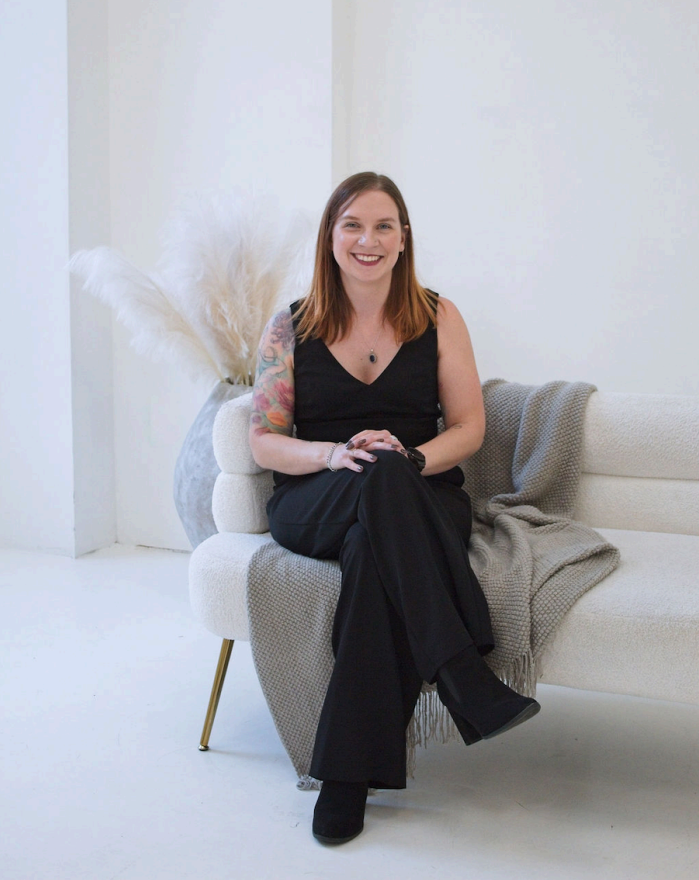
I chat with Emily Beauchamp from Growing Together Doula Services. Together, we discuss building a full-spectrum doula practice, creating sustainable boundaries in a caring profession, and supporting families through continuity of care from pregnancy into the first year postpartum. At the core of this conversation, we explore the importance of mother-centric, holistic support.
Listen Now
About Emily
Emily is the Founder, Full Spectrum Doula, and Perinatal Educator at Growing Together Doula Services. Her background in caregiving spans roles as a nanny, coach, first aid instructor, daycare provider, and outdoor educator. After experiencing a challenging transition to motherhood and surviving Hyperemesis Gravidarum twice, she began supporting families as a breastfeeding peer supporter. Since founding her practice in 2017, she now offers trauma-aware, holistic care across the full perinatal time in Muskoka, ON.
Reach out to Emily here: https://www.growingtogetherdoulaservices.com/
We explore the following questions:
How did you begin your journey into postpartum doula work, and what first sparked your interest in supporting mothers?
What was your own experience of becoming a mother at a young age, and how did that shape the way you now care for families?
How did your early experience with breastfeeding peer support lead you towards becoming a doula?
What kinds of doula work do you offer now, and which areas have become the main focus of your practice?
Why do you feel it is important to offer birth, postpartum, and childbirth education together as one full package of care?
What made the Newborn Mothers approach stand out to you, especially around the idea of “holding mothers” rather than only focusing on babies?
How has your doula work changed over time as your children have grown and your family life has shifted?
What has helped you balance doula work, being on call, and your responsibilities as a mother?
How do you recognise and manage burnout in such a caring and emotionally demanding profession?
Why is having a network of backup doulas and trusted referrals so important for sustainability?
What makes holistic postpartum support different from more specialised support, such as sleep consulting alone?
What advice would you give to newer doulas about building a sustainable business while still protecting family life and personal wellbeing?
If you love this podcast please subscribe leave a 5-star rating and review wherever you listen!
Transcript
Julia Jones:
Hello and welcome to the Newborn Mothers Podcast. Today we're having a chat to Emily, who has been a doula for a little while now. You must be coming up to 10 years, I think.
Emily Beauchamp:
March 2027 will be 10 years officially.
Julia Jones:
So we're nearly there. And I know you studied with me a long time ago, and then you've come back to study the new certification as well. So Emily, you're in Canada, and you do a wide variety of doula work. Do you want to tell us a little bit about yourself?
Emily Beauchamp:
I'm a full-spectrum doula in Muskoka, Ontario. I started back in 2017 just doing postpartum work. and then I've expanded into fertility, birth work, grief and loss, childbirth education and infant massage and lactation. So lots of different modalities going on at any given time now.
Julia Jones:
And do you do everything equally, or is there like something that's your main thing or your favourite thing to do?
Emily Beauchamp:
I do a majority of birth and postpartum and childbirth education altogether. I have packages that all include all of those together. I think that they're really important as a full package having that education piece and rapport prenatally and then attending the birth and then the postpartum care for upwards of a year postpartum.
So I can be with families for quite a while, which is really nice and you get to know people pretty well and growing families really well too, which is really nice.
Julia Jones:
I love that. I think that's really important too.
Take us back to the beginning. What happened in your life that made you think that this might be a career that you would like to try out?
Emily Beauchamp:
So I had my kids young. I was done having kids by the time I was 23.Most people were either still in college or university or not having kids within my friend group. I didn't have a lot of support. I didn't have a lot of people to chat about anything. I'm a huge bookworm.
I've always wanted to be a mum, but still, transitioning into parenthood was quite a challenge. I had hyperemesis gravidarum for both of my pregnancies, so very hard pregnancies. And then in postpartum I just didn't know what I didn't know. My village was not there. I didn't know how to build one and all that kind of stuff. So I was in between you know, how do I have two littles and balance work and daycare and all the things. So I was already kind of looking at a career change, and I was volunteering with our local health unit doing peer support for breastfeeding. And someone said, "You know, you're really good at connecting with people. I wonder if you'd be interested in doula work."
I hadn't heard of a doula actually, at that point. this was in between my kids. so I got married, got pregnant, and then eight months pregnant, I was like, "You know, becoming a doula sounds great." I'll have some time. And I started my certification in in March 20, 2017. Started with postpartum work so I could schedule it a little bit. It was a little more predictable, but there wasn't a lot of time for training. So it took a while for me to get things up and running, but here we are almost 10 years later and now supporting quite a few people in those areas that I didn't feel super supported and thought there's got to be better out there. This can't be what everybody's going through, regardless of age, family dynamics and things like that.
Julia Jones:
I find that really interesting. I think I had my kids quite young, but I was 26, not under 23, but I definitely felt that kind of isolation from my old friends when you have kids at a different stage of life than the people that you grew up with... it's much harder, I think, to find that village.
And also, your friends don't really get what's going on or how to support you and be there for you because they haven't been through it yet. So yes, I can understand that.
You're also not the first person to tell me that someone else said, "You should be a doula," or, "Have you heard of doulas?" Because I think as well, it's the kind of work that a lot of people have a real natural inclination, a skill in, in caring and connecting with people and someone else will notice it and go, "Have you thought about being a doula?"
Emily Beauchamp:
You know, I always wonder if this was something that was brought up in high school when we were talking about post-secondary and job fairs and stuff. I was like, "Hmm I think I would've gone for this."
Julia Jones:
What did you think you would be? What was your career before?
Emily Beauchamp:
I studied recreation and leisure services and ended up in outdoor ed. I was working with all sorts of ages in, like, an eco centre doing teaching and just being out in nature, which is definitely up my alley as well. But certainly that compassionate care has always been there. I've always been working with children as well, it's not necessarily out of the realm for me to be there.
I know lots of people were always like, "Oh, you could be a doctor," but I didn't want as rigid as those systems tend to be with, because I knew I wanted to be a mum, the doula work allows me to have that flexibility but still do that compassionate care, give back to the community and whatnot as well.
Julia Jones:
So was birth doula training the first training that you did, or did you start with postpartum?
Emily Beauchamp:
Nope, it was just postpartum. I took just a solo postpartum training. I had a bit of lactation training because I was doing that peer support, so they trained us there. and then I did that for, oh, I think up until about 2019, just before COVID hit I had started to do birth work and then had to do all of COVID which changed how we were all working but came out relatively really well on the other side of that and then created packages that, like I said, had everything all together now.
And that is what people really tend to like about my services is that I'm not just one thing or another and it's very well-rounded care and they're not feeling rushed in either direction to meet me and build a rapport for, like three hours in postpartum or prenatally meet me at birth real quick and then maybe one off in postpartum. I'm quite there. So the clients tend to like that.
Julia Jones:
I can imagine that. I mean, so much research shows how important continuity of care is and yet it is so hard to actually get. I'm curious, you've done so much study and in 2020 you did my old version of my course and now you're back again this year to do the full certification. What makes you keep coming back for more with Newborn Mothers? I'm interested in that with someone who has already got as much skills as you do.
Emily Beauchamp:
Honestly, I don't even remember how I found Newborn Mothers. I wonder if I was scrolling on socials and I caught an ad or something back when you were first putting those out, and I fell in love with the idea that we were holding mothers. I feel like the training that I did originally for postpartum doula was very generic.
But you're specialised in, like, holding the mum, and I thought that was really important because when I was going through postpartum, lots of people wanted to come over and hold my baby, and I did not want people to hold my baby. I needed help doing other things and relaxing with my baby and how did I manage all of that and manage the house and things too. So that's where I was like, yes, this is the training that I want to focus on because I want to hold mothers, not just babies. That would be just a bonus. Everybody thinks that we're all here to hold the babies, and it's all great that I have a job to snuggle babies all the time, but I really, really enjoy holding those Newborn Mothers.
That's what made me fall in love with the training originally and just the in-depth modules, and it's always been very, very accessible. So the way everything's laid out, videos, transcripts, workbooks, calls and whatnot. You're holding your students very well in all their different learning styles and whatnot, and there were very few barriers. So when I had the opportunity to come back and, and do some upgrading, I definitely jumped on that because I knew it was a safe space and a cosy space to do training in for sure.
Julia Jones:
I'm so glad to hear that. I mean, that was originally why I did actually start doing this training. My early doula training, like yours, was really just a lot about ... I mean, we even learned things like how to teach a mum to bathe a baby and it felt very basic but also very baby-centred.
When I had my own children—because I did actually do that study before I was a mother myself—and then when I had my own children, and I experienced this huge transformation, I didn't have the word matrescence back then. It was a long time ago.
But now I know that was the question that wasn't answered in all my previous training. I was like, "We need to actually figure this out. " And in my own journey as a mother and as a doula myself then came across these kinds of things about, again, I usually call it baby brain and just recently the word matrescence has had a huge increase in popularity and awareness even though it was actually coined in the 70s.
But 15 years ago that wasn't really a common thing. So yes, as I kind of discovered this, I agree. That's really what I wanted in my training. So I'm glad to hear that's what you noticed and what you found as well.
Emily Beauchamp:
Yeah.
Julia Jones:
So tell me how your work has changed over time because you obviously started when you had very small babies, they're a little bit bigger now.
How do you kind of fit this in, and how does it ebb and flow with your life and your other responsibilities?
Emily Beauchamp:
I do find the doula work comes in waves. So I'll have some quieter months, and then we'll have kind of like a little mini baby boom and I'll be quite busy prepping and then attending births and doing the postpartum work and then it'll die down again. And so it has worked out relatively well. So for me in Canada, we have summer holidays, July and August, and so everybody's kind of having summer holidays, and I find people are either on holiday or people are off work at least, and so people are visiting a little bit more. They tend to not need as much support. And then in and around the winter holidays as well here. So it kind of ebbs a little bit more. There's not as many babies being born but definitely spring and fall are quite busy times.
This is usually when my kids are in school now, so I've been able to increase my workload a little bit more. I was certainly very selective when mine were little. I could only work certain hours. I had to chunk out my hours. I was working more weekends as well to juggle everything. When my partner was home, my husband was home to help with the kids and things like that.
And now I definitely doula work full-time. I don't have another job. This is something that I do Monday to Friday and on weekends if need be and I'm on call often and things like that, but it still gives me the flexibility where I can get the kids ready in the morning, put them on the bus, work school hours get them home, eat dinner with them and then if there's anything in the evenings that need to happen, I can work like a 60 to 90 shift as well or do an overnight so that I'm still there come morning.
It's all really worked out well and then we moved a couple years ago to Muskoka. We were originally a little further north and so my service area grew and I've just been actually growing again in the last two years adjusting to working with two different hospitals in two different locations with two different kind of labour wards and support systems and things like that and just a bigger area where everything was a little bit more contained into a city. Now I'm kind of like in a large urban area or rural area, Surrey. So lots more driving, lots more how's the weather going to play out in those winter storms that we get?
Julia Jones:
I love it. So it sounds like it's actually just kind of fitted in with your life quite well anyway, without you needing to have huge boundaries and things. But I wonder about sustainability because you have been doing this for a long time as your main only income and I would say that a lot of people will have moments or seasons of burnout in caring professions and when they're running their own business. So, how do you manage that sustainably?
Emily Beauchamp:
Every once in a while, I do test my capacity where I will overbook myself with births or clients in general and take on and see how it runs out in the wash. I do have backup doulas as well, other trusted doulas that we can go back and forth on which helps. There's been moments of burnout for sure. They're definitely unavoidable, but I think that I'm pretty good at recognising that and can quickly scale back and say, “Oh I'm not going to take on more clients now. I will refer out.” or say “I'm not available for that birth. I'm not able to take you on,” which is still heavy on the heart. We never want to say no. I am lucky enough that I do have some doulas I can refer out to and a collective as well that I can kind of draw upon and say “Try to reach out to these as well,” which definitely helps. I think having the kids and I have their school schedules to balance and their extracurriculars and things like that, I only have so many hours in the day, so I've always had to balance it.
I find some of some younger doulas or newer doulas that have more flexibility or take on so much more and then they burn out and burn out and burn out whereas I've always been very family first where my kids are priority. My husband already works long hours and at one point was working away, so I was still solo parenting often and how do I make my own business work with that and things. So it kind of forced me to have good boundaries, and you do all of that mental math very early on, and I've just consistently adjusted every once in a while, though, like this last spring or this spring that just passed you know, I had four births back to back, and I'm like, I cannot take on anymore. So I've been referring out for anybody that has come up recently last minute or for summer birth. And I said, “No, I'm going to take the summer off for birth specifically and finish up with some of the postpartum clients I have and enjoy some lake time with the kids and, and stuff like that.” So some of it is forced because I want that work-life balance and then some of it is just recognising those signs.
Julia Jones:
And having a good support network, it sounds like having other doulas you can refer to is, it would relieve a lot of the weight of feeling like I have to support this person, or if I don't say yes, then they're going to be all alone so…
Emily Beauchamp:
Yes. Yes. Certainly earlier on, that was a struggle when I didn't have as big a network, I didn't have as many resources up where I was previously. There just weren't a lot of doulas. There were no collectives up that way, either, or groups of doulas.
I definitely took on a few times more than I could necessarily chew. I got through it for sure, but then you start doubting, like, “Oh, I don't know if this is sustainable. I don't know if I want to do it like this but I also don't want to…people are searching for help, I don't want to be turning them away either, and how do you, how do you manage that?” So that one is definitely a trickier one.
Like I said, I pushed that boundary again this year already and I made it through, but at the same time, I'm recognising that's not sustainable, that's not ... Oh, that's not also the doula that I want to be, like, exhausted where I'm getting calls and I'm like, “Oh, I don't love this.” Those are early signs of, like, “Oh, we gotta scale back or find a different rhythm.”
Julia Jones:
That's just life, isn't it? It's always going to be you test something out, it doesn't work. And as long as you learn from that, where that line is, then that's all we can ever do.
I can also really relate to what you were saying about building the business whilst having young children. I have another business friend, a woman who doesn't have kids, and she was saying to me like, “Oh, gosh, when you run your own business, and you're just working, like, 60 or 80 hours a week and blah, blah, blah.” And I was like,
“I've never been able to do that.”
Like, having a business whilst having babies has meant that it's always had to fit into school hours. So in a way that's been a good sort of natural boundary for how much I can take on and what I can fit into a day.
Emily Beauchamp:
I feel like that really benefited me in developing those boundaries early on. I'm really grateful for those because I definitely am a person that could overwork herself quite well. So having the littles and wanting to put them first or just in the school hours or daycare hours or whatever it was or putting them to bed at seven or eight at night and then only being conscious for so many hours and able to do good work in the late evening then yeah, I was like you run out of hours, this is all you could do and you still have to get up nice and early for your kids, get them up and breakfast and all that kind of stuff too. So they have all their demands that are not negotiable.
Julia Jones:
Can you tell me about your text talk and text service? What does that mean?
Emily Beauchamp:
It's something that I developed within COVID because we were not allowed to be in the hospital. During prime lockdown, we weren't even visiting homes at one point as well. So this was something because I started off in peer support where it was just text support. We were kind of matched with another person within the community that was breastfeeding, and we were just there to text and troubleshoot as best we could and be a listening ear. So that's kind of where it grew from, and it's basically, I call it like a doula in your pocket where they pay a fee for either weekly or monthly and they have access to me, my lending library, my referral list, my networking, skills and brain and things like that.
And so instead of necessarily heading to Google or waiting for a call back from the doctor or trying to find a family doctor because that's a huge issue here then they can text me and say, “Hey, like, is this normal or do you have any tips or tricks for getting baby to sleep or I'm thinking about pumping what what should I be looking for? What, how do I start?” And things like that. So it takes a little bit of that loneliness out of postpartum where maybe they are getting nice hands-on support from family, or they're coping through the days, but they're not getting good advice or suggestions. They're not being listened to sometimes. Some family members might be like, “Oh, I did it this way, and I think it's the best way to do it.” So I'm a bit of that third-party information that's unbiased, evidence-based, things like that. So I can really support people in their confidence building and whatever works for them without having lots of that bias or judgement around things as well.
Julia Jones:
And you also have that holistic support and that broad knowledge because I think most of the time when mums have that sort of support, like someone they could just text or email a question, it would usually be a sleep consultant.
I don't think there's many other professionals who would offer that, but then they're only getting that lens. And sometimes the advice a sleep consultant would give you doesn't support your breastfeeding goals or isn't right for your mental health or the values in your family or whatever? So having someone like you who actually has that broad knowledge, and when they ask you a question about sleep, you also know about their breastfeeding situation. I think that's really valuable.
Emily Beauchamp:
I can do it anywhere. I've had clients out of the states because we're not a regular profession so I don't have to work necessarily within one location which was a really cool experience. I also offer it to all my clients if they're getting through the days, but they really enjoy chatting with me and just having basically a doula in their pocket. They don't get overwhelmed with Google or forums or social media when you post online and go, “Hey, what do you think about co-sleeping or something?” And you've got this huge list of pros and cons and opinions and ideas. And then where do you start with all of that?
Julia Jones:
I imagine that's a really nice off-ramp, too. If someone's had your support for a good few months and they're kind of like, "I'm not quite ready to, to finish," but you're kind of ready to ease them off that level of support, that's a really nice option.
Emily Beauchamp:
For sure.
Julia Jones:
So that's almost all my questions for you, but the last thing I want to know is what's next? Have you got any plans to, to change anything, to add anything new? What are your kind of bigger dreams and goals, or are you just, like, really happy and you love this work?
Emily Beauchamp:
I feel like I'm still kind of getting the lay of the land, so to speak, since we moved. It'll just be two years come this fall. I am still adjusting. So I think I'm going to kind of hang out with what I've got going on right now. Certainly, I continue to have more and more opportunities. I'm kind of more central in Ontario and I'm getting more involved with the collective that I'm in that has doulas all over the place at this point. They're doing lots of cool things creating hubs and community centres and stuff. And I know there's a good chunk of people interested or starting doula training in the area.So I have been doing a little bit more mentoring which I've been really enjoying as well.
I feel like there's so many endless opportunities. Since we moved, just the more connections I make, I feel like there's, like, five other people being like, “Hey, let's chat. Let's go have coffee.”
I don't actually know where I will end up. I think I will eventually get back into doing a little bit more teaching within the community, whether that's childbirth education or my infant massage classes or things like that. I do enjoy teaching. I know that if anything ever becomes slow or whatever, I will definitely be jumping back into some teaching roles, but I'm super excited to be continuously expanding options, services, networking, being in the community, and seeing what the community needs. I'm really flexible.
Julia Jones:
I love it. So your website is www.growingtogetherdoulaservices.com. You're based in Ontario, is that right? So if people want to find out about you they can go there. Is there anything else you want to share?
Emily Beauchamp:
No, I don't think so.
Julia Jones:
Amazing. Thank you so much for sharing your story, and thanks for being here.
Emily Beauchamp:
It's been so lovely. Thank you so much.
